What makes this baboon different from any other baboon?
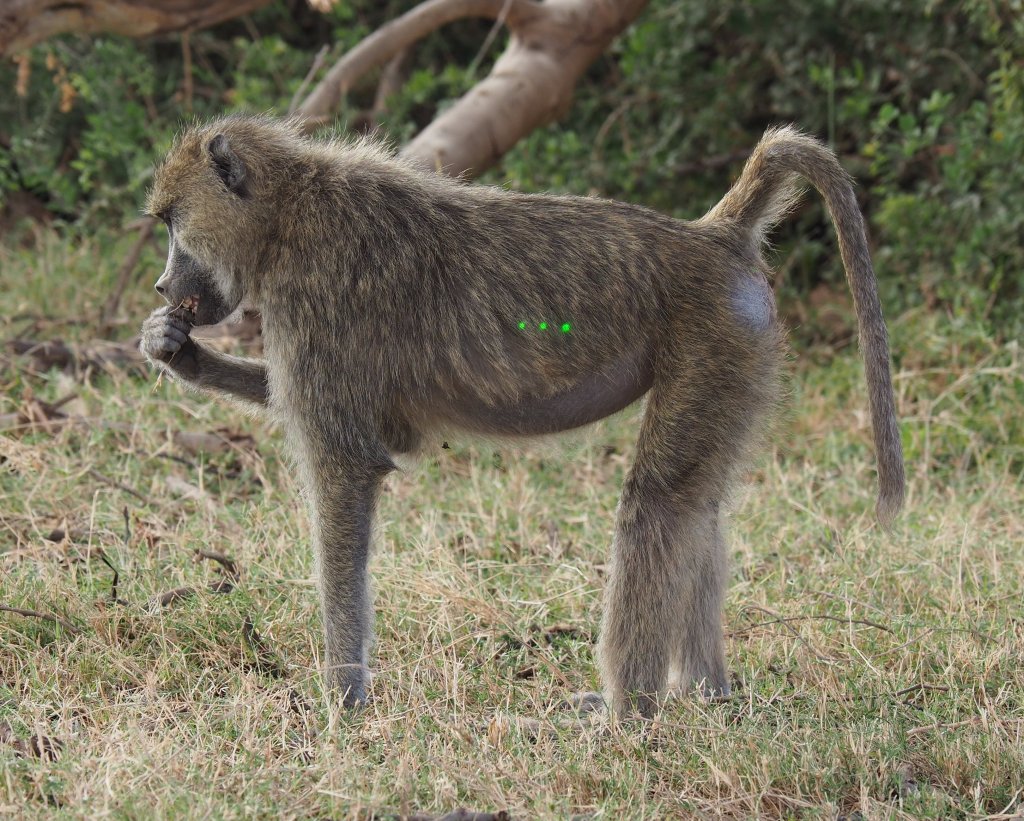
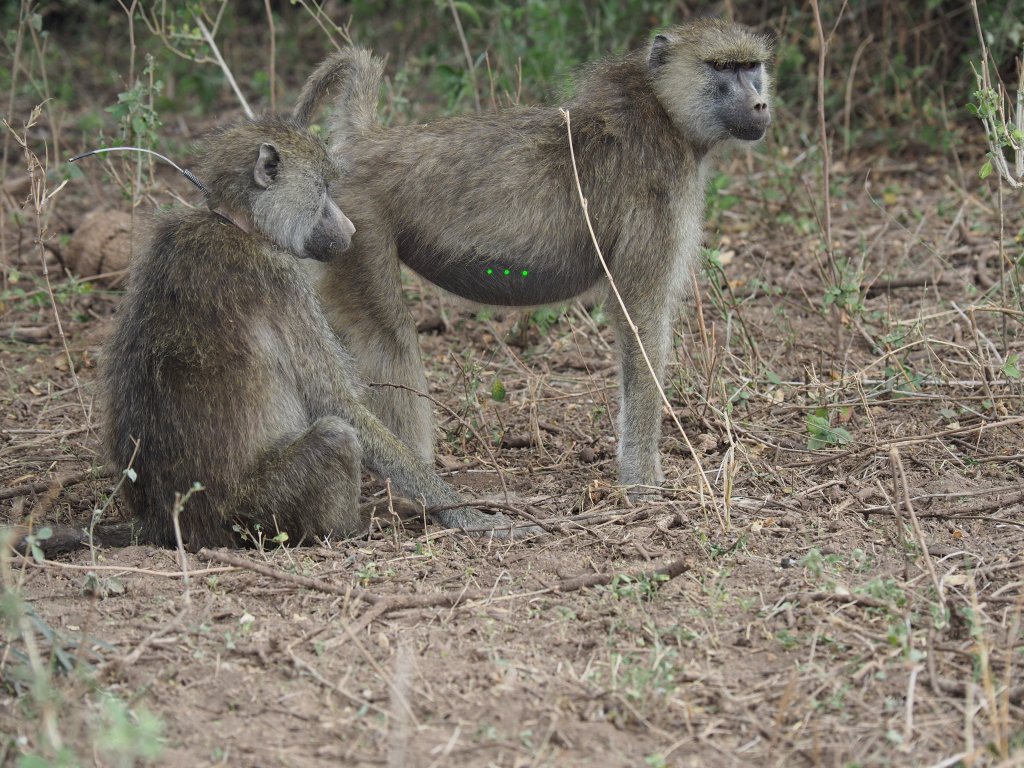
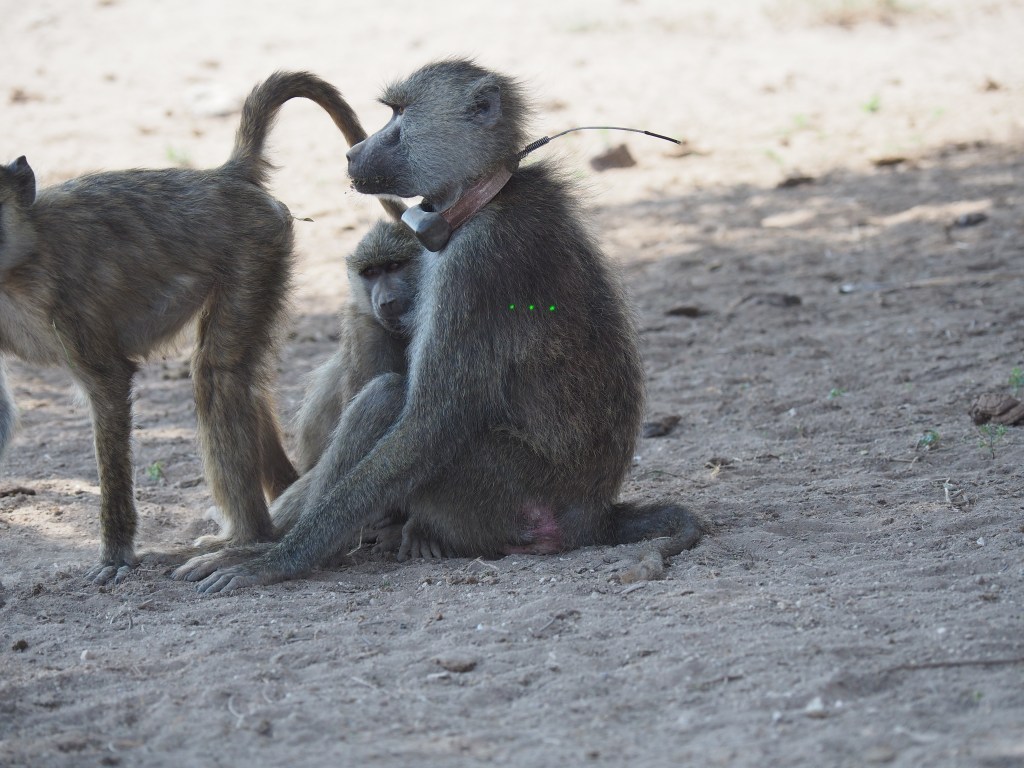
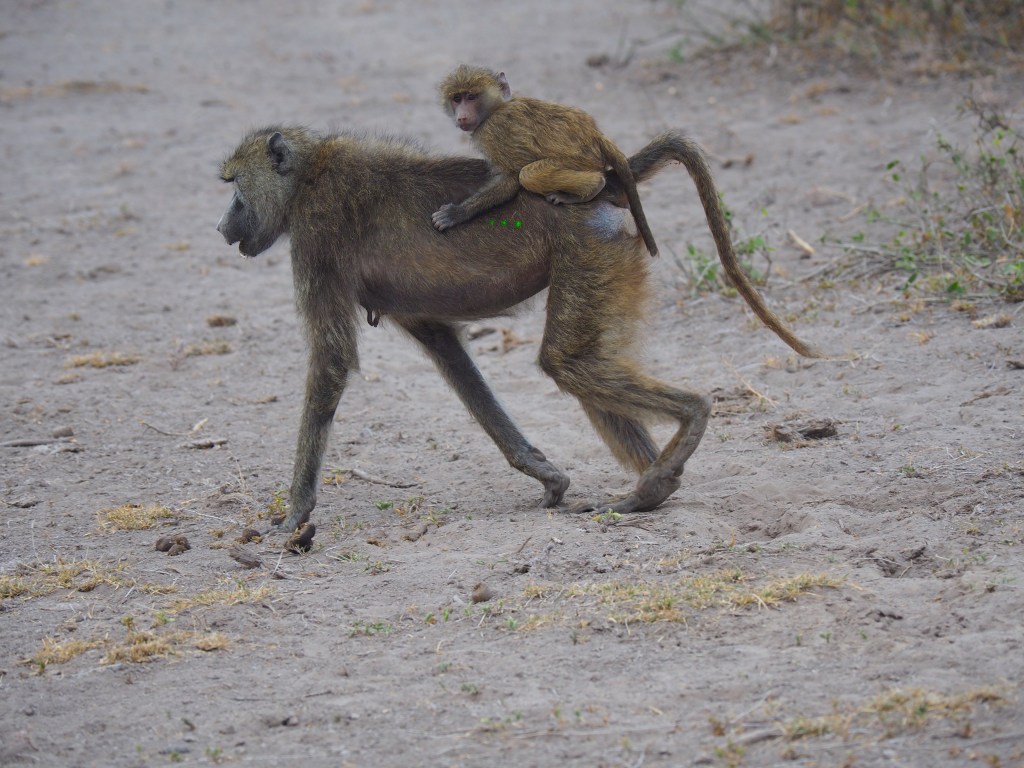
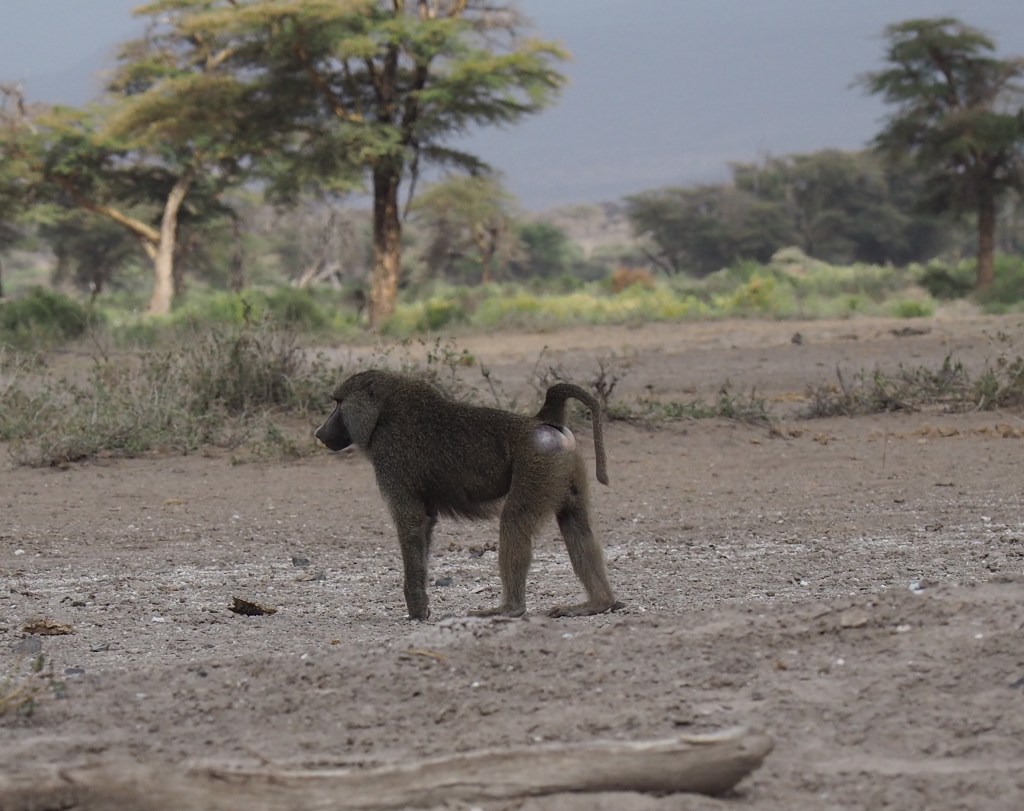
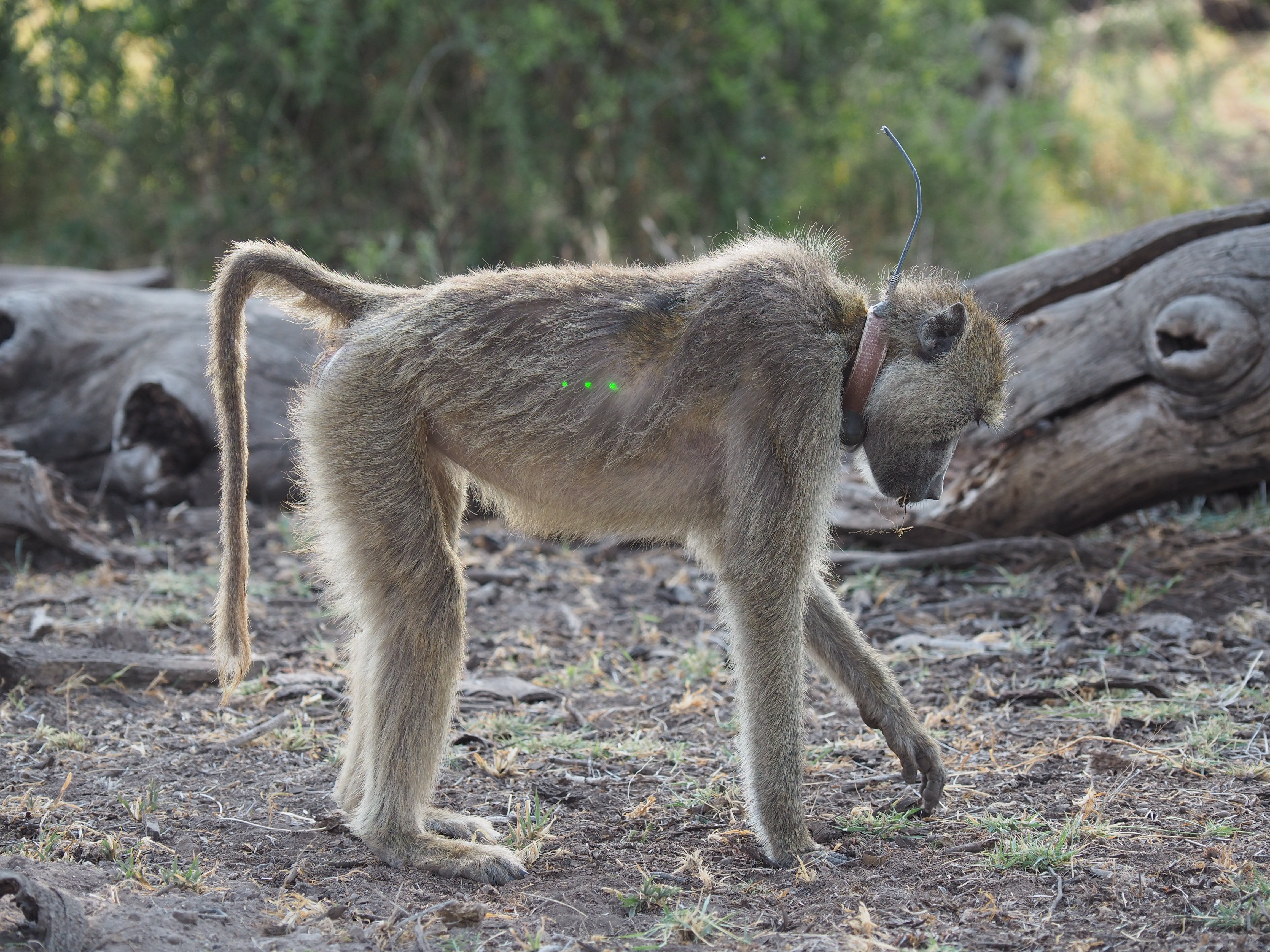
To keep everything uniform, almost all of the pics in this blog feature baboons in the pose I need for photogrammetry, lasers included.
That’s a question I find myself asking basically constantly while out in the field. To make sure I get photographs of as many individuals as possible, I have to look for specific animals I haven’t captured yet. To do that, I have to have some idea of what makes them unique. Observers on the team have to know every individual by name for a daily census. With their experience, it takes only a glance at a baboon in the field or even from a picture I show them on my camera after I’ve taken pictures of an animal I don’t know. How do they tell baboons apart so easily? Let’s try and figure it out.
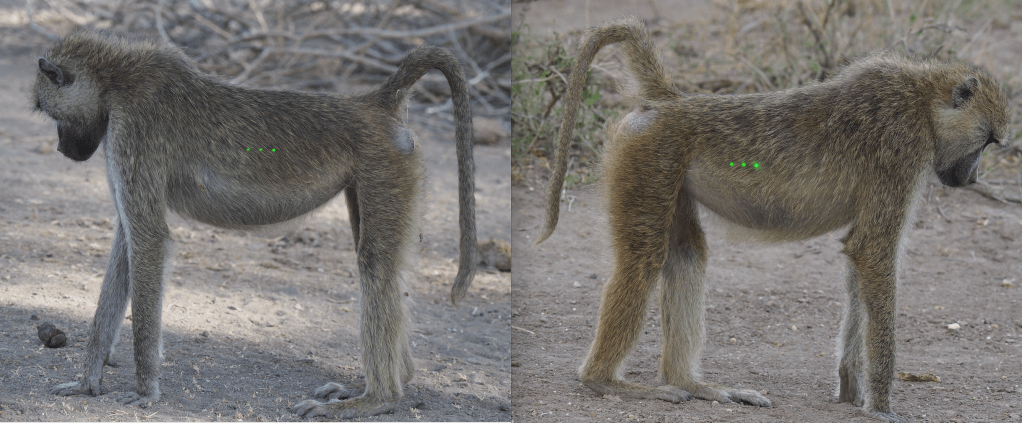
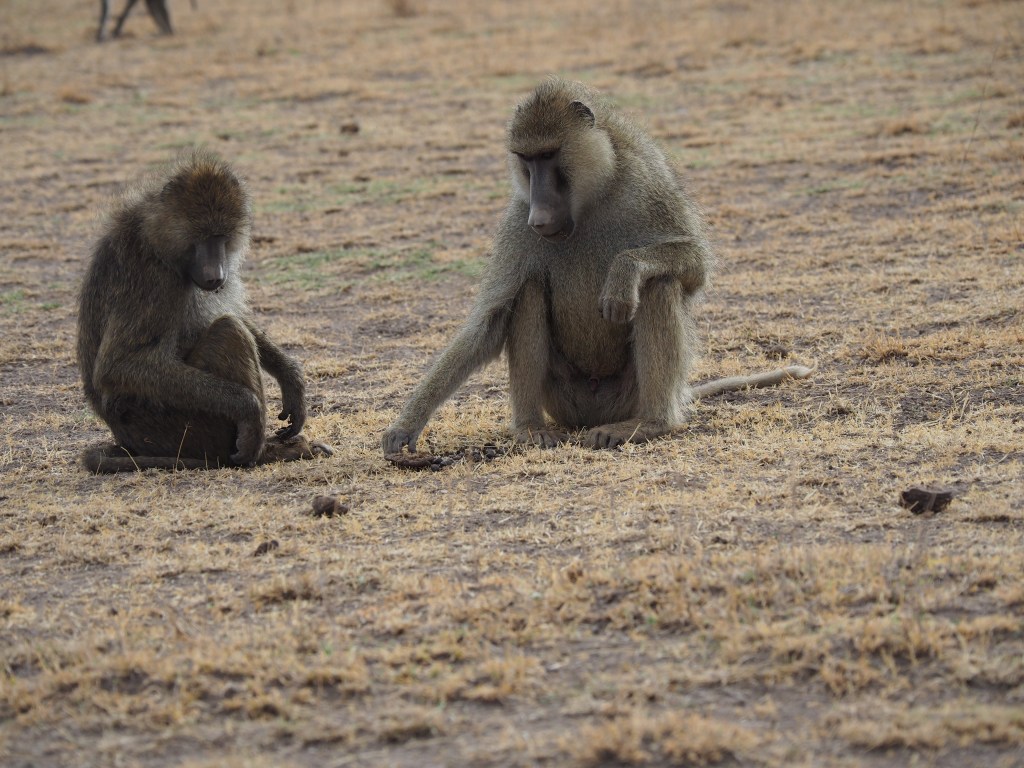
What’s the difference between these
two baboons?
Tibe (left) and Telly (right).
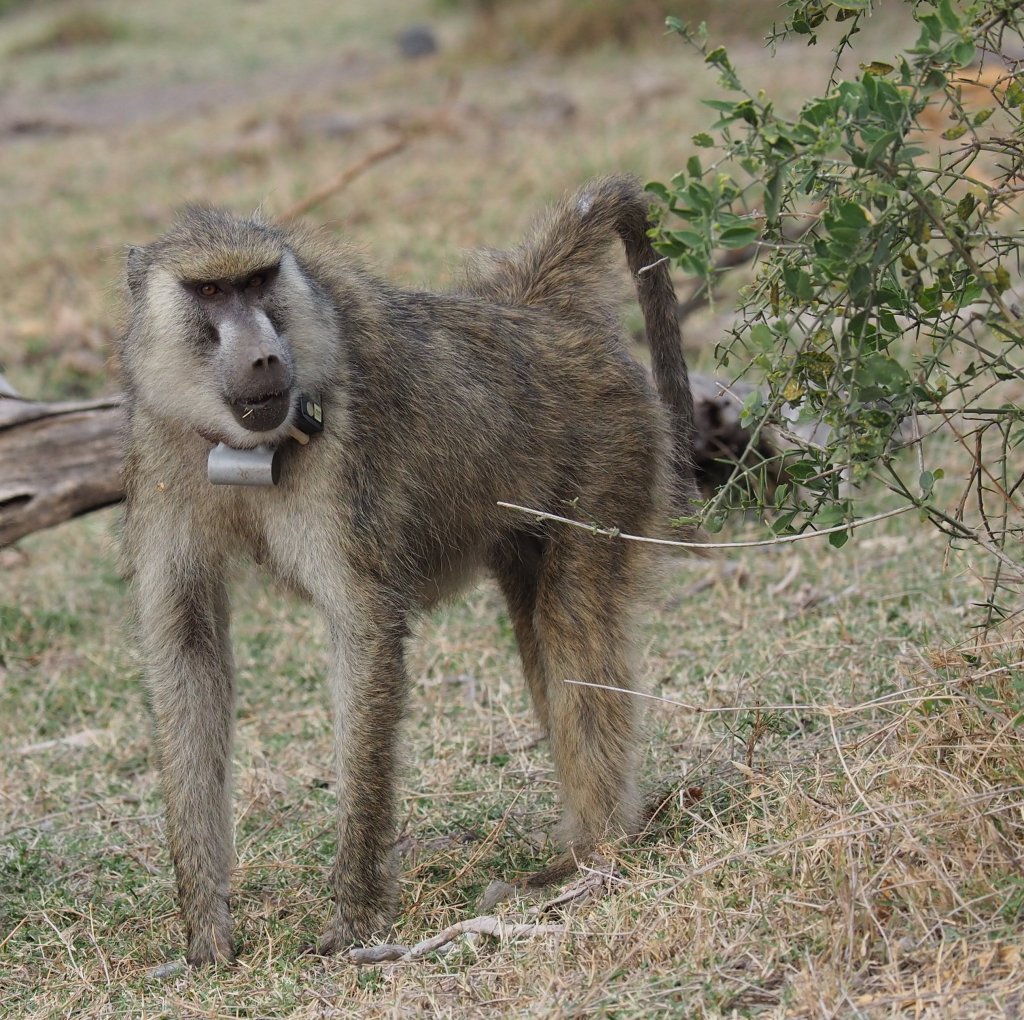
That’s easy, one is wearing a collar. In each group, 2 – 5 individuals
wear a radio tracking collar. That makes life way easier, especially when
looking at two basically identical sisters, like Telly and Tibe.
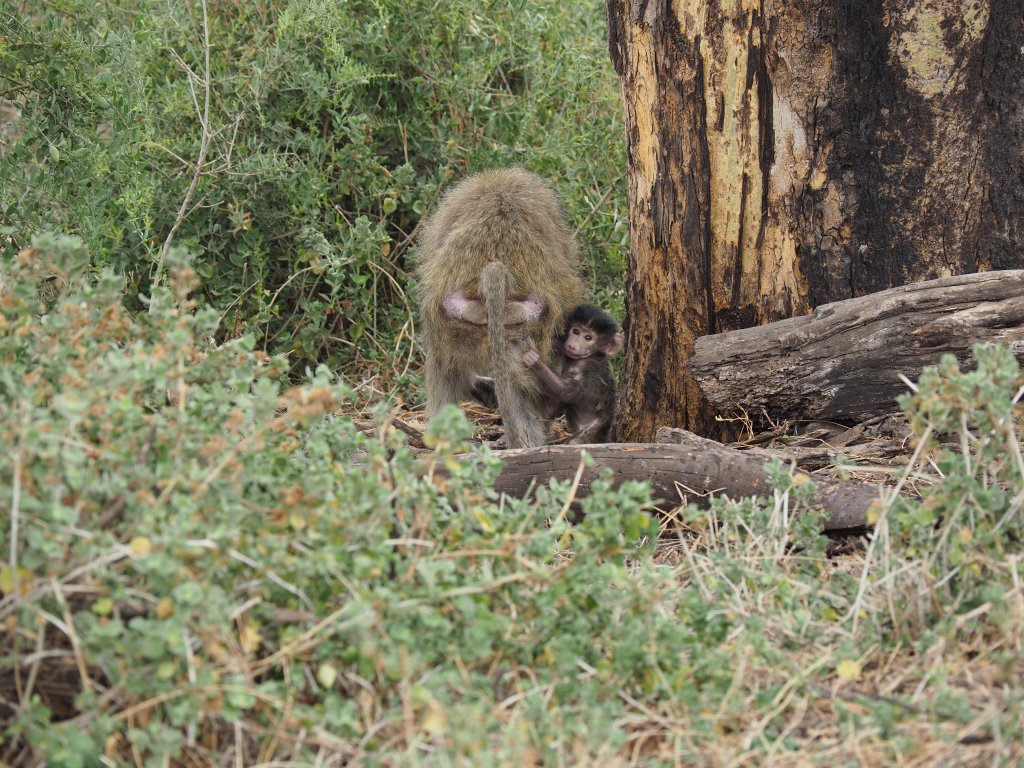
Life stages can also help identify a baboon. When a female becomes
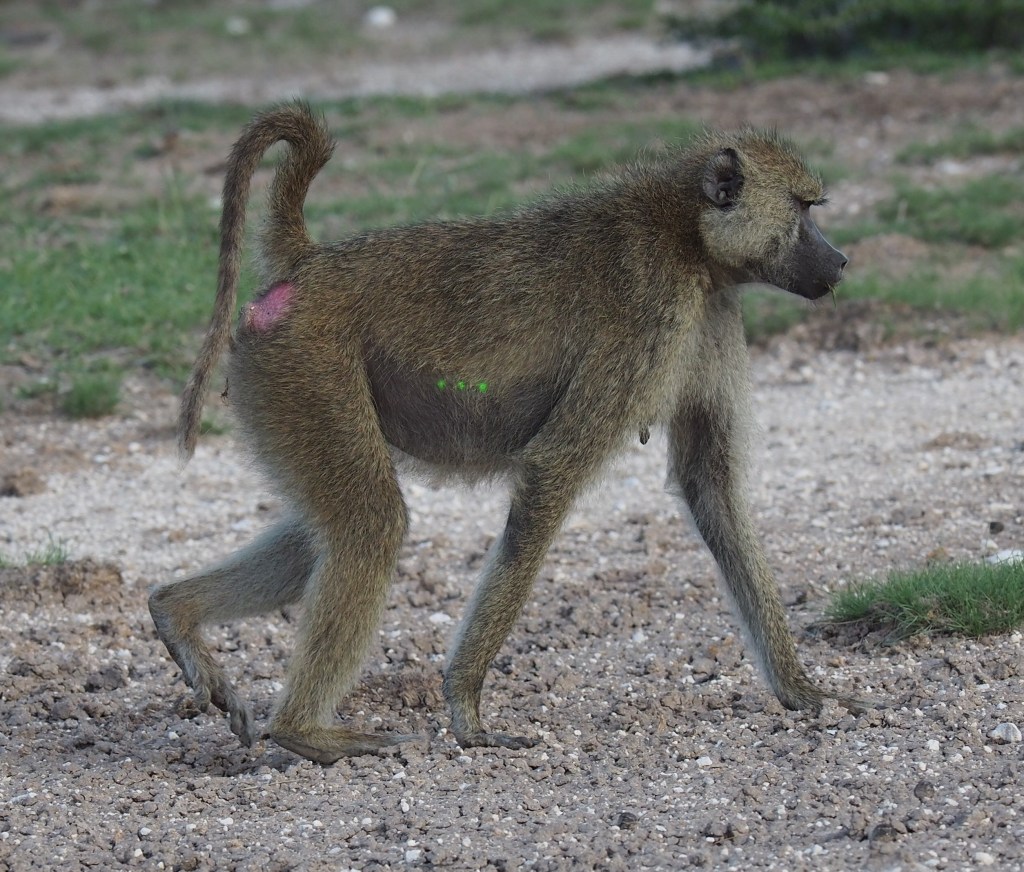
pregnant, the exposed skin under her tail becomes bright, bubble-gum pink. This
builds up for the five months of pregnancy and can take some time to fade after
the birth of the baby.
So pink, so round.
Most importantly, each baboon has, to quote my advisor, “something that makes them weird”. Some have crazy long arms. Others have tails that stick straight out or curl funny. Since our population has hybrid animals, fur color ranges from dark grey to bright yellow. Others have faces that look perpetually grumpy or sad, which is a very scientific way to double check an ID you think you know.
Eclipse (left) is one of the best baboons because she’s dark, has a bent tail AND a collar. Faulu (right) is very blonde and not as recognizable but I’ve been told she’s a great and gentle mom, just like Eclipse.
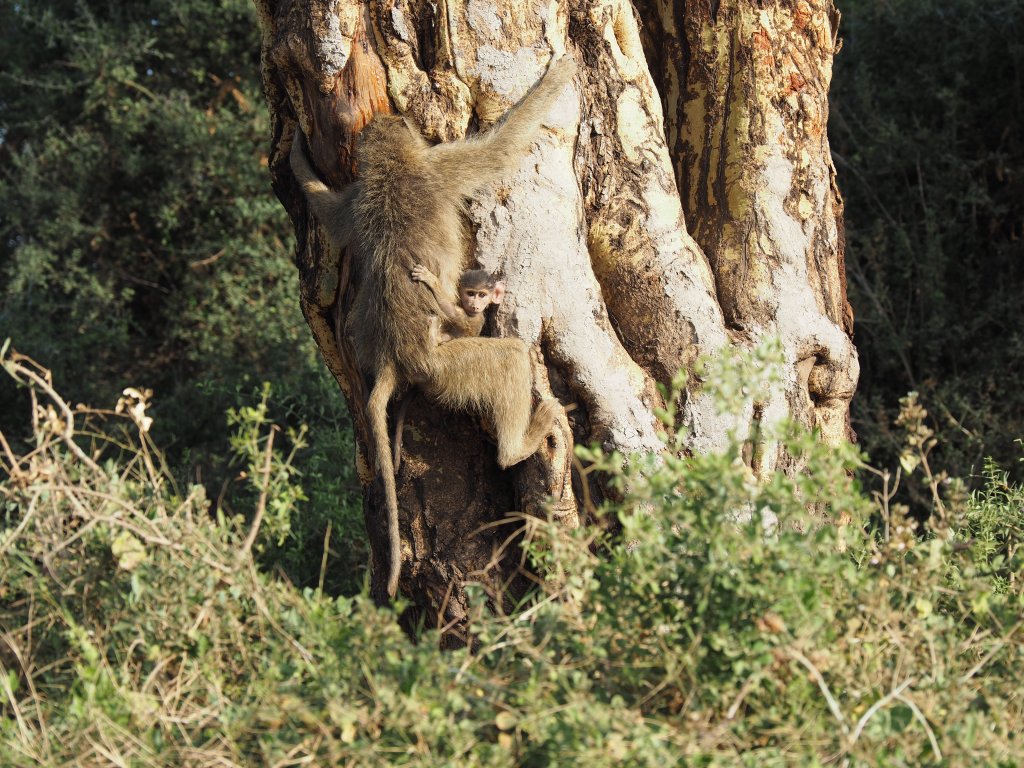
Taking pictures of baboons can be really hard. They don’t listen when I ask them nicely to pose for me and have the nerve to climb trees for food instead of eating bugs and grass on the ground. I can’t control how cooperative the animals are but working to learn identifications is something I can do and enjoy doing. It’s a fun puzzle to solve and knowing their names makes me feel closer to the animals I spend my days with.
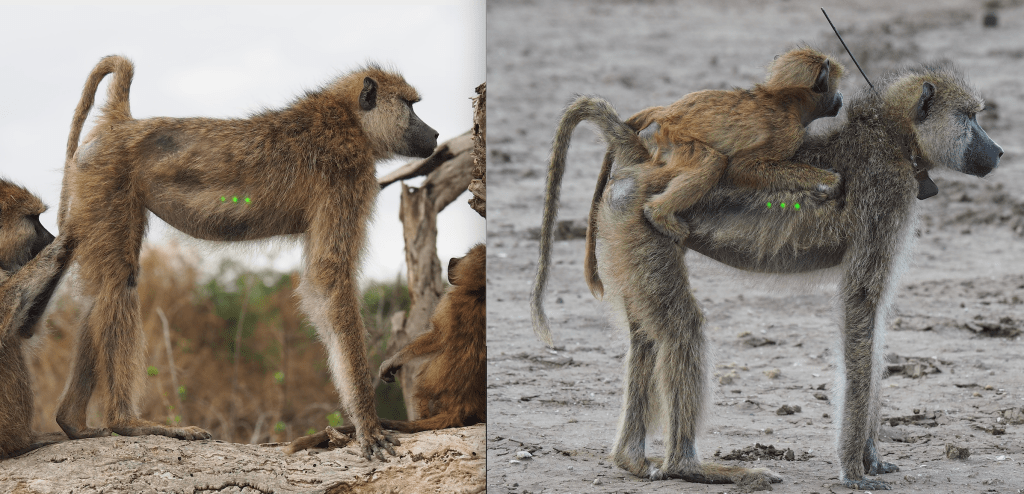
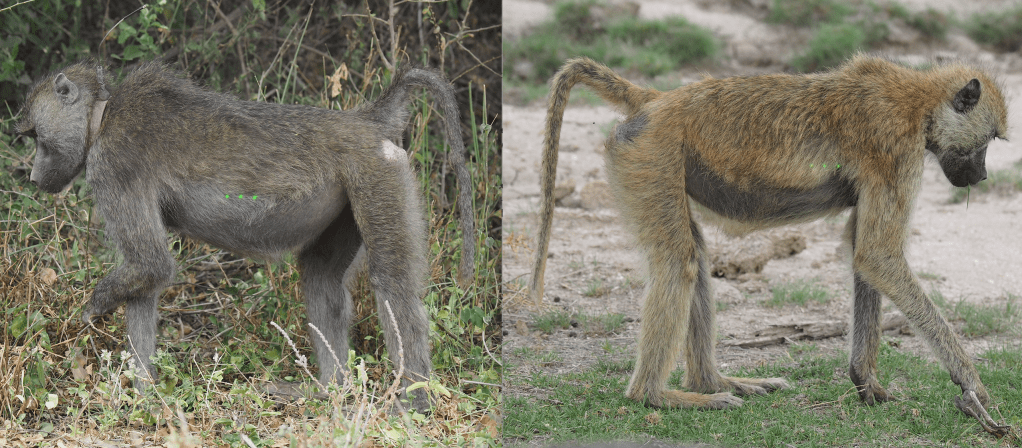
Here are some more baboon pairs just for fun. Can you spot the differences?
Me: I feel like Niobe (left), Nysa (right), and their sisters all look really similar. Observer: Ok but they don’t.
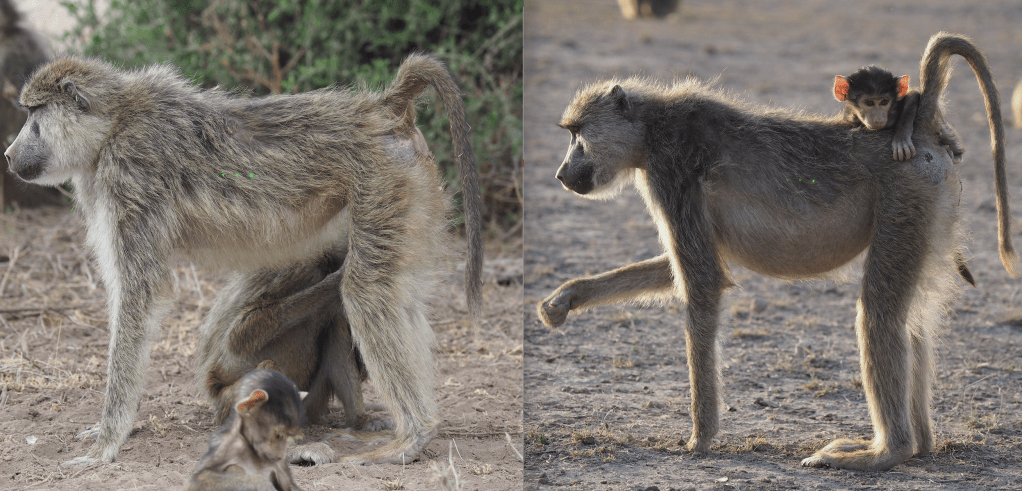
No, the tiny baby on Yeller (right) doesn’t count, Yai’s (left) has one too. This is a mother/daughter matchup which means when their newests kids are playing together, one is the other’s aunt. Baboon family trees are a tangled web.
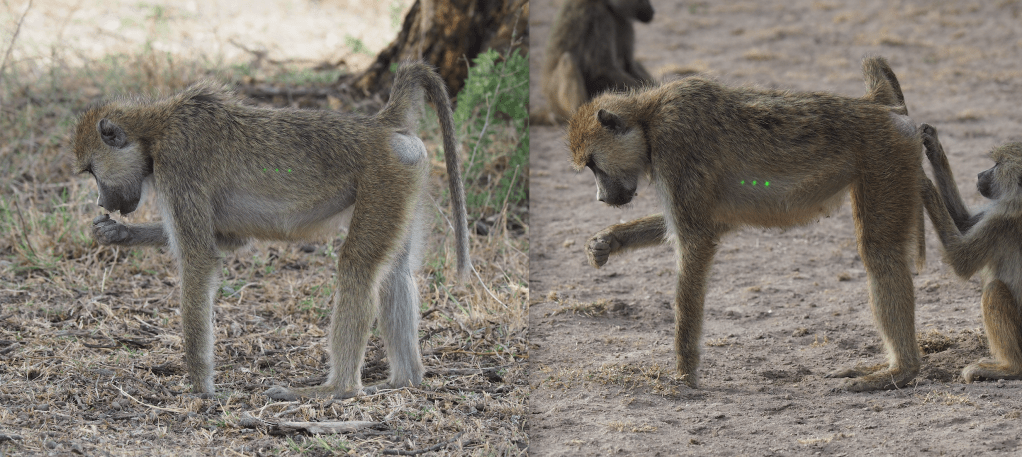
One of these baboons is shy and the other isn’t. Other than that, I genuinely cannot tell Ezra (left) from USA (right) so if you spot anything, let me know!
Last week, I went with Chelsea to Maasai Mara National Reserve, located to the north of Amboseli along the Tanzanian border.
We camp we stayed in is home to Michigan State’s Mara Hyena Project. Like with the baboons, the hyena team hires recent college graduates as research assistants. While we went to see more of Kenya and a park with more food, water, and wildlife than the one we call home, we also went to spend a few days with girls our age doing a similar job.
From the moment our bush plane landed, we knew we weren’t in
Amboseli anymore.
Rainy skies AND hills? Nope, not the Kenya I’ve seen so far!
While a bad rain year has left our park in a state of drought, Maasai Mara is full of rolling green hills and forest lined rivers. While Amboseli looks more similar to pictures of Mars than anywhere I’ve seen on Earth, the Mara’s landscape reminded me of rural Western North Carolina or the foothills of Kansas. That is, until we saw the animals.
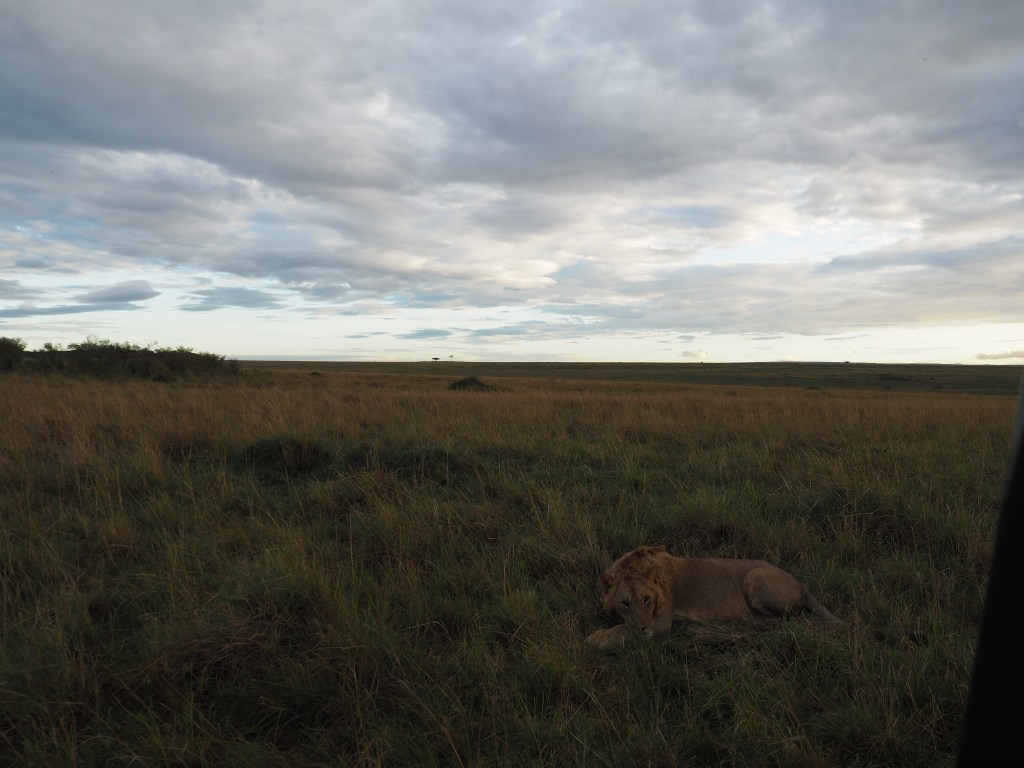
Ahh yes, an empty field…nope, there’s a lion.
On each of our three days, we spent mornings on game drives looking for cats and other animals we hadn’t been lucky enough to spot yet in Kenya. On each day, we saw a different mammal, rhinos to cheetah to leopards. On the rest of the drives, we saw plenty of topi, eland, zebra, impala and giraffe.
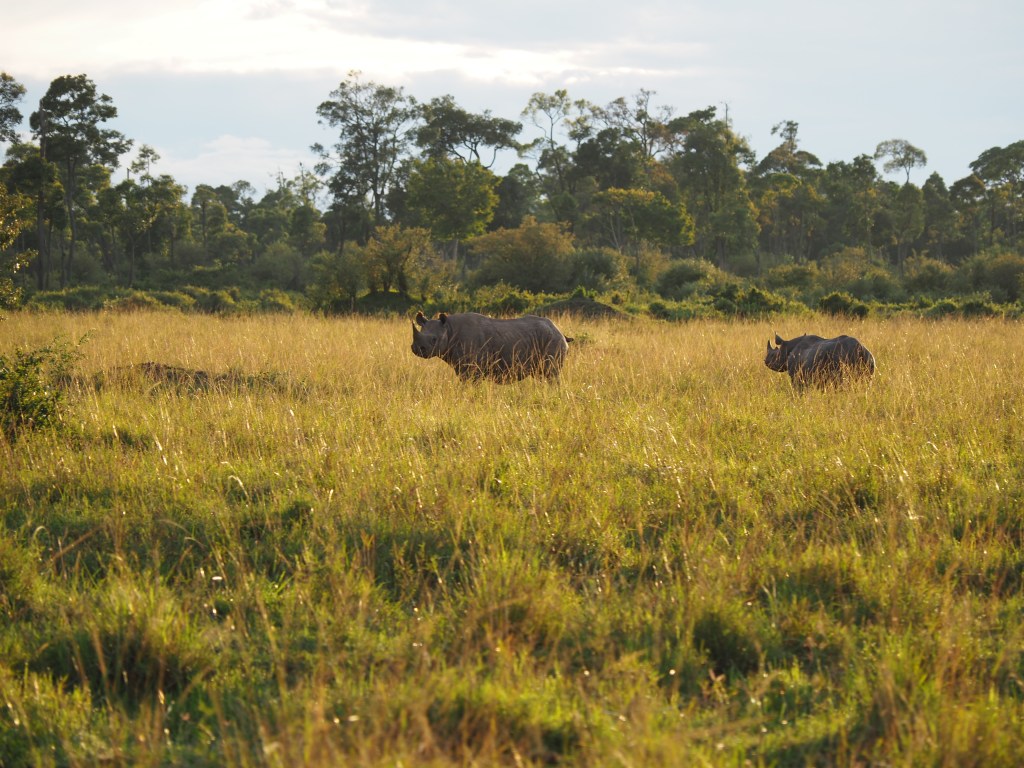
I never thought I’d see a black rhino in the wild, much less a mother and nearly adult calf.
Maasai Mara is famous for hosting the Great Migration as over a million wildebeest move from Serengeti National Park across the Kenyan border. We missed these giant herds by less than a week. I was sad until I realized seeing the wildebeest means seeing them attempt The Crossing over the river where they fight against hippos, crocodiles, steep riverbanks, and lions waiting on shore. Every year, about 10% of the herd fails to complete the migration. You know those horrible Planet Earth scenes? Yup, that’s the Mara. While we missed the living animals, plenty of carcasses and happy predators showed the signs of their journey.
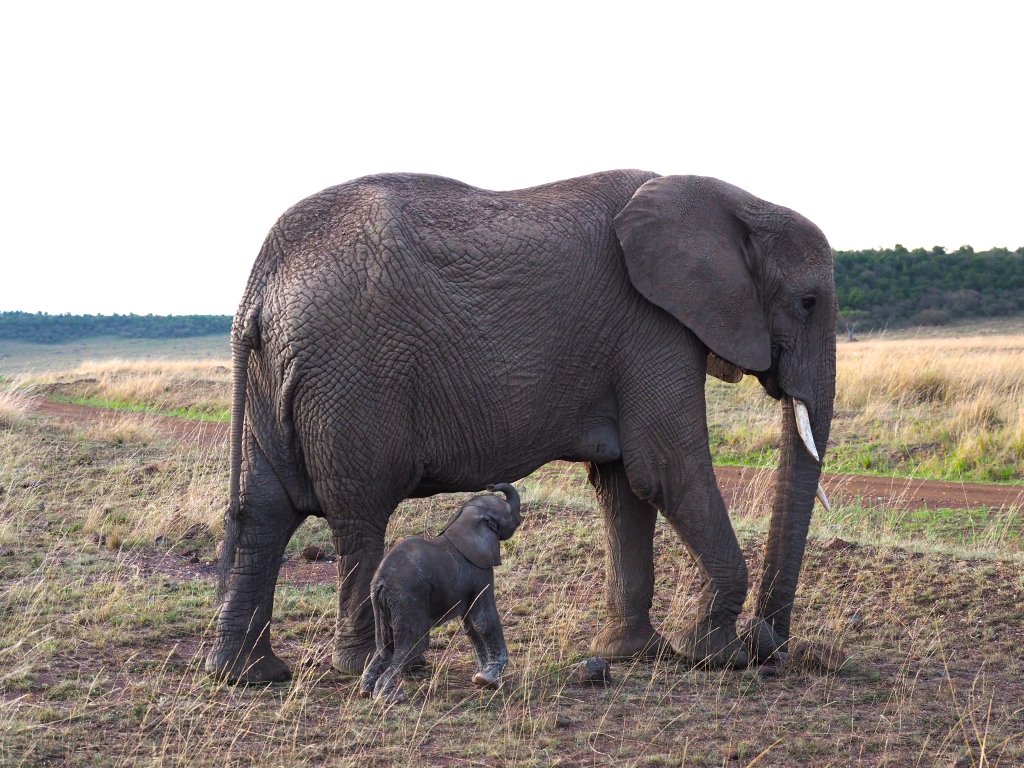
Here, have a newborn (as in literally hours old) elephant to clear your mind from that last mental image.
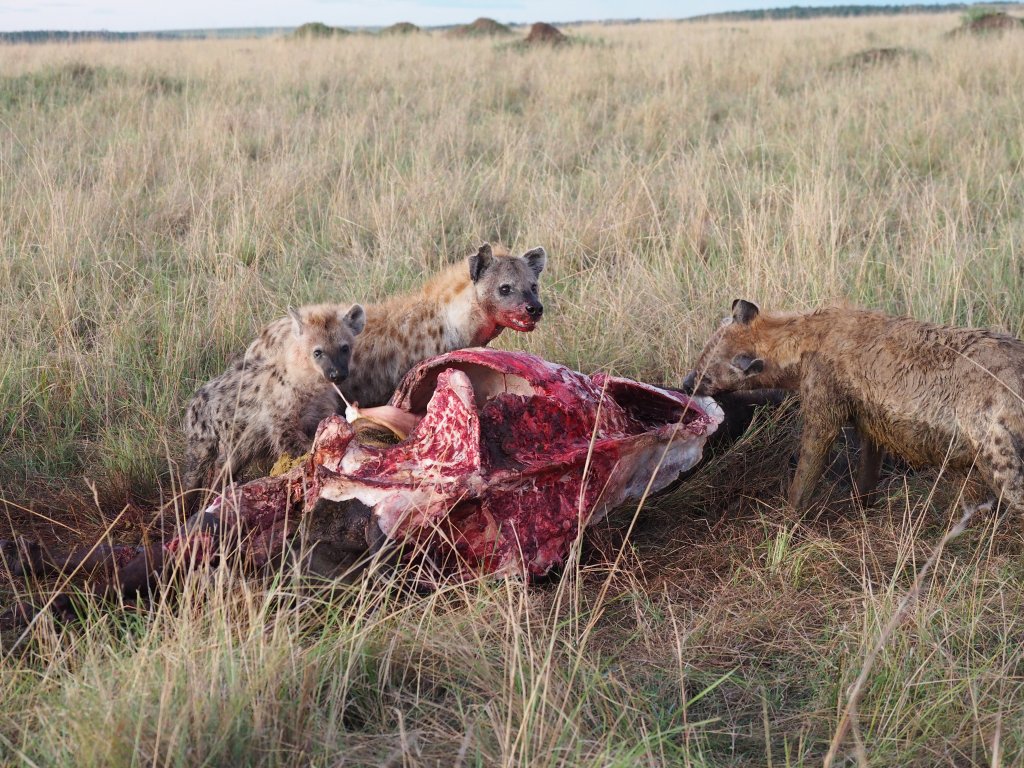
Of course, we couldn’t visit the Mara Hyena Project without meeting the hyenas themselves!!
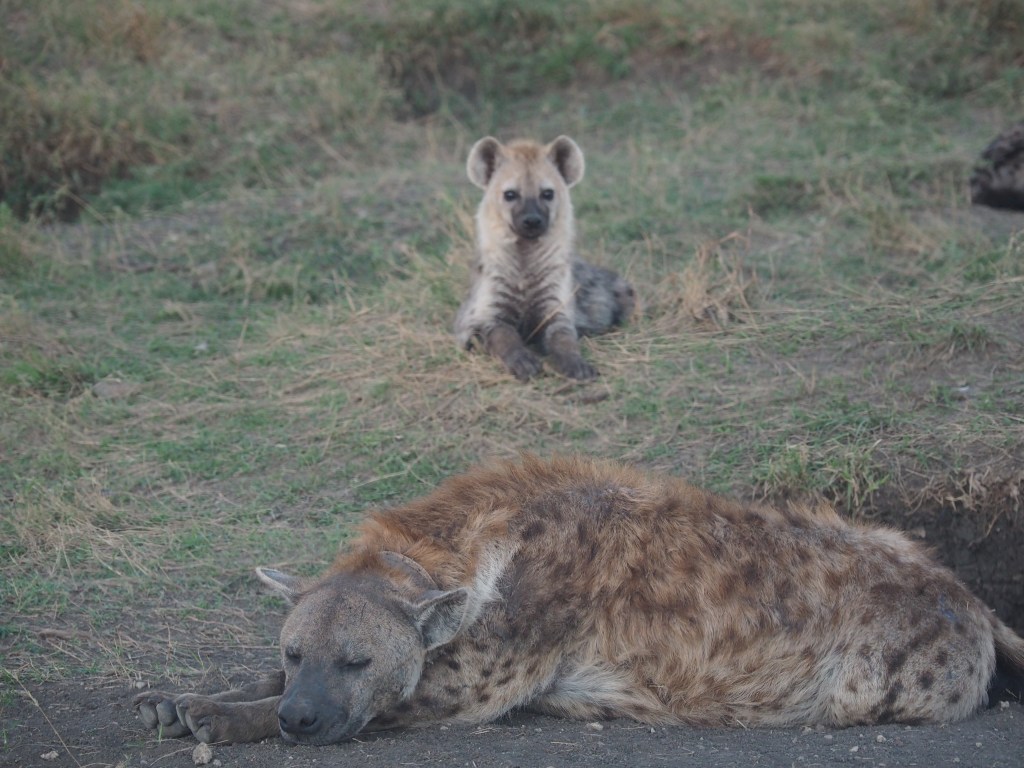
I’ll be the first to admit that hyenas are one of the ugliest animals in the entire world. Their necks? Too long. Their walk? Crazy awkward. That being said, they are incredibly interesting as a study species and a super important predator in the savanna ecosystem. That’s right, hyenas aren’t scavengers any more than lions are scavengers. When you have 50-80 clan members to feed every week, you’ll take meat wherever you can get it. I may not be Team Hyenas-are-the-Cutest but I am Team Hyenas-are-Misrepresented-in-the-Media.
Look into this face and tell him he’s a second-rate savanna animal.
Spotted hyena have a social system defined by female dominance and a rank inheritance pattern that is also found in many monkey species, including baboons. Every night between behavioral data recording, we got to chat about the differences and similarities between our study animals while, of course, debating who has the better job. We may not have gotten a clear winner, but I will say, I’ve never seen a baboon crawl out of a buffalo rib cage.
Today’s morning in the field was an exciting one, but also pretty terrible. Instead of spending time taking photogrammetry pictures, I spent my day encountering problems I had only considered distantly and never expected to see first-hand. Since I can’t go out and change them right now, I might as well write about them.
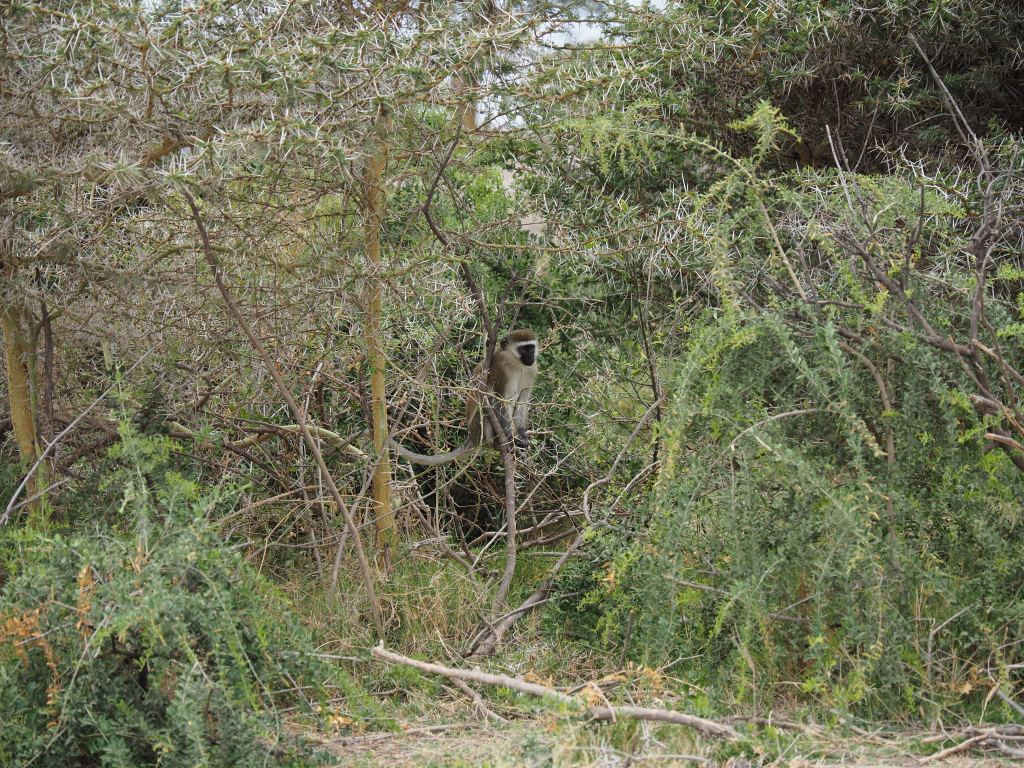
When we started our day, we were warned that there was a vervet monkey in the area that had been recently released into the wild after a time in a captive facility. While wild reintroduction of orphaned animals is possible, it is incredibly difficult as the animals become reliant on humans for food and companionship. Sure enough, less than an hour into our day, a vervet jumped up onto our car with us right next to it. Since vervets are considered nuisance animals and are frequently chased off by humans, we knew this was no wild monkey. We rolled up the windows of our car to keep it away from our food, chased it out of our area and continued the day.
The same vervet, later in a tree.
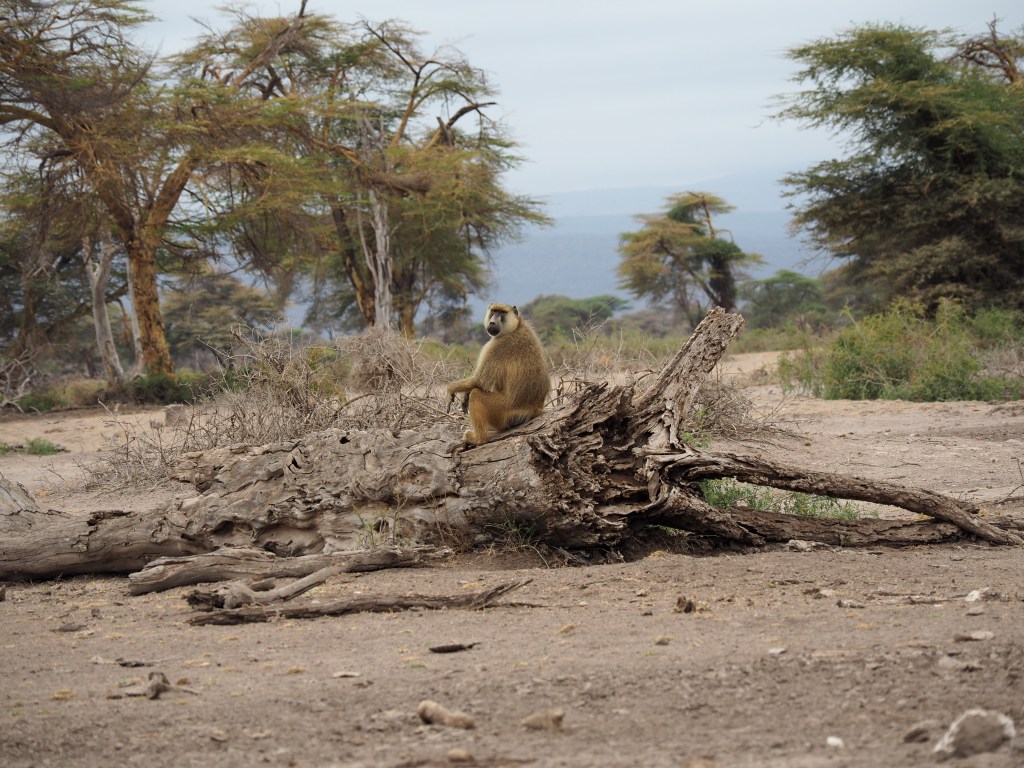
As we followed our baboons, we noticed an unknown male was trying to join the group. This male hadn’t been seen in any of our study groups and I was enlisted to photograph it. I approached it, taking pictures from far away since non-study group animals run away from strangers. Or at least, they are supposed to. This was not the case with this healthy-looking male. I was able to get just as close to him as many of my usual females.
“Handsome, boy does he know it.”
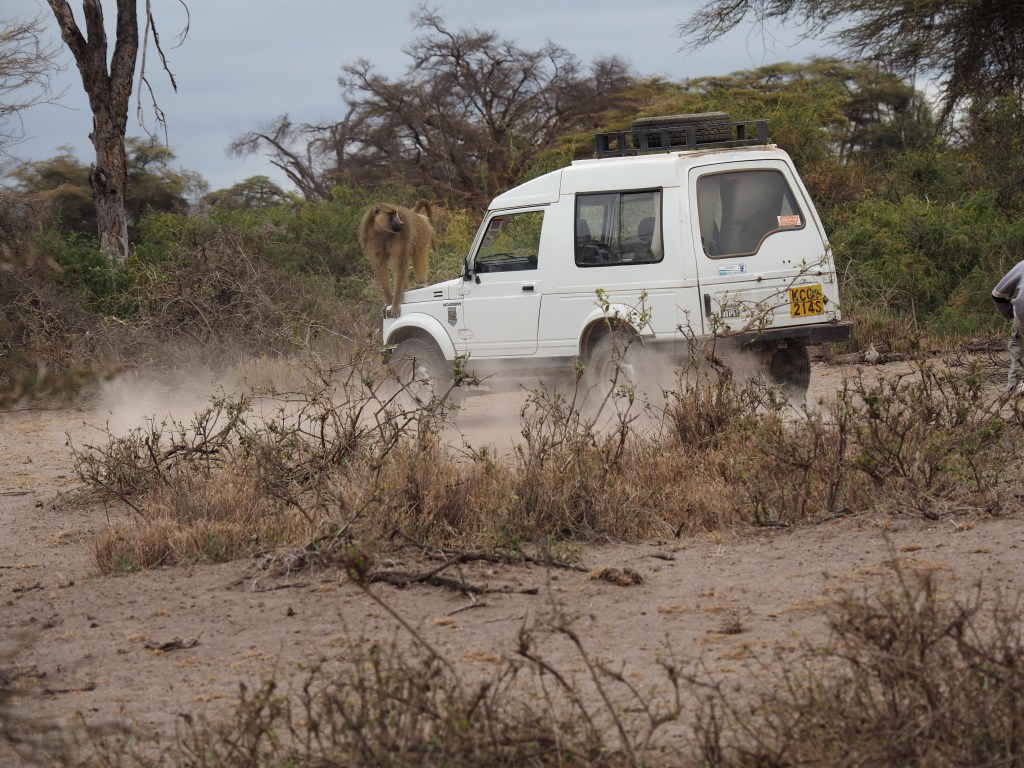
At this point, we were pretty sure that those people who told us they had released a single captive vervet monkey were not telling us the full story. This was confirmed when the baboon jumped up on the car and made an attempt to charge at our driver when he went to chase it away. When I first started working out here, I asked what I should do if a baboon charged me. They laughed and said, “our baboons don’t charge humans”.
The dust cloud is from Ben running away, that’s his arm on the far right.
By the time we left the group, the rogue male was still lingering on the periphery of it. This animal is now dangerously used to people from his life in captivity, a story that plays out for so many exotic animals raised as pets. While we don’t know for sure this was his life, keeping a baboon as a pet wouldn’t actually be illegal in the United States and when it got to this size and level of aggression, there would be no where for it to go. This is why so many conservation groups try to discourage the purchase before anyone gets attached to a cute baby face.
On the surface, this baboon has it far better than those still stuck in someone’s home or backyard enclosure. He was fed more than he likely would have eaten in the wild, making him the largest, healthiest animal in the group and now has a chance of establishing himself as a breeding male. If he can’t assimilate, however…well, the lifespan of a solo baboon is not a long one. In addition, if he continues to approach people when he is with a group, he puts all of their lives at risk. We have seen it happen in our own study population: if a baboon goes somewhere people don’t want it, it is frequently killed. If it eats livestock or becomes dangerous, it isn’t the only baboon that is hunted down.
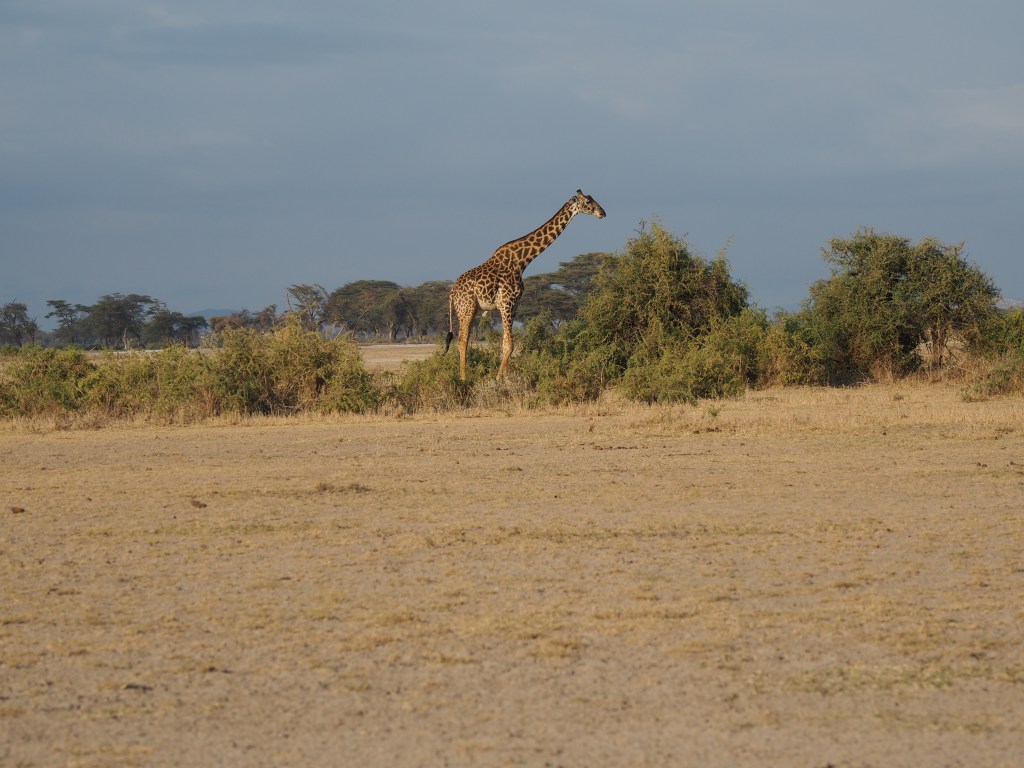
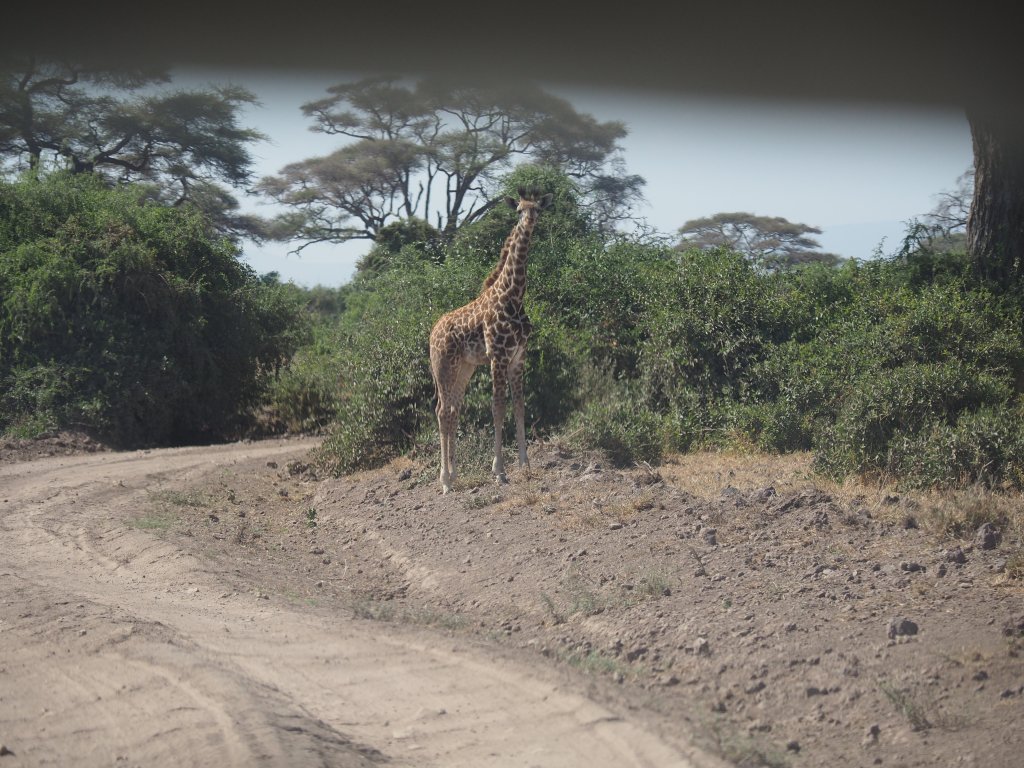
After starting my day thinking about the primate pet trade, I expected it to get better. Having conversations in the car about exotic animal trafficking and the lack of laws across most of the US that allow it to continue lead me to a conversation about stray and feral domestic animals and the destruction they cause. Like we had spoken them into existence, two stray dogs came trotting through the savannah. While they are fully capable of hunting down baboons, they had their eyes on a bigger target, a baby giraffe.
I’m not about to post pictures of dogs trying to eat a baby giraffe so please enjoy these pictures of happy, living animals.
As mentioned in an earlier post, I have no tolerance for animal death. But at least when watching a lion pride work together to take down prey, you get to see cool predators. Dogs that have no place in the wild killing a newborn endangered animal is a no-win situation.
We watched for a few minutes as the mother giraffe tried to
kick at the dogs and keep her baby crowded under her. These dogs were fast, avoiding
the giant hooves and persistent, catching up over and over again. When they got
the baby on the ground, I stopped watching. The baby did get away, though as I
am writing this, I was told an hour later they were still circling. Who has more
patience, the predator or the prey?
Another happy, living animal.
This is another issue with no easy solution. Keeping dogs as livestock guardians is a successful conservation option. If there are dogs, there are fewer predator attacks which means fewer predators are killed in retaliation. The key emphasis in keeping dogs with livestock is that they should stay with livestock. For them to be able to roam free and hunt down endangered animals? That’s helping no one.
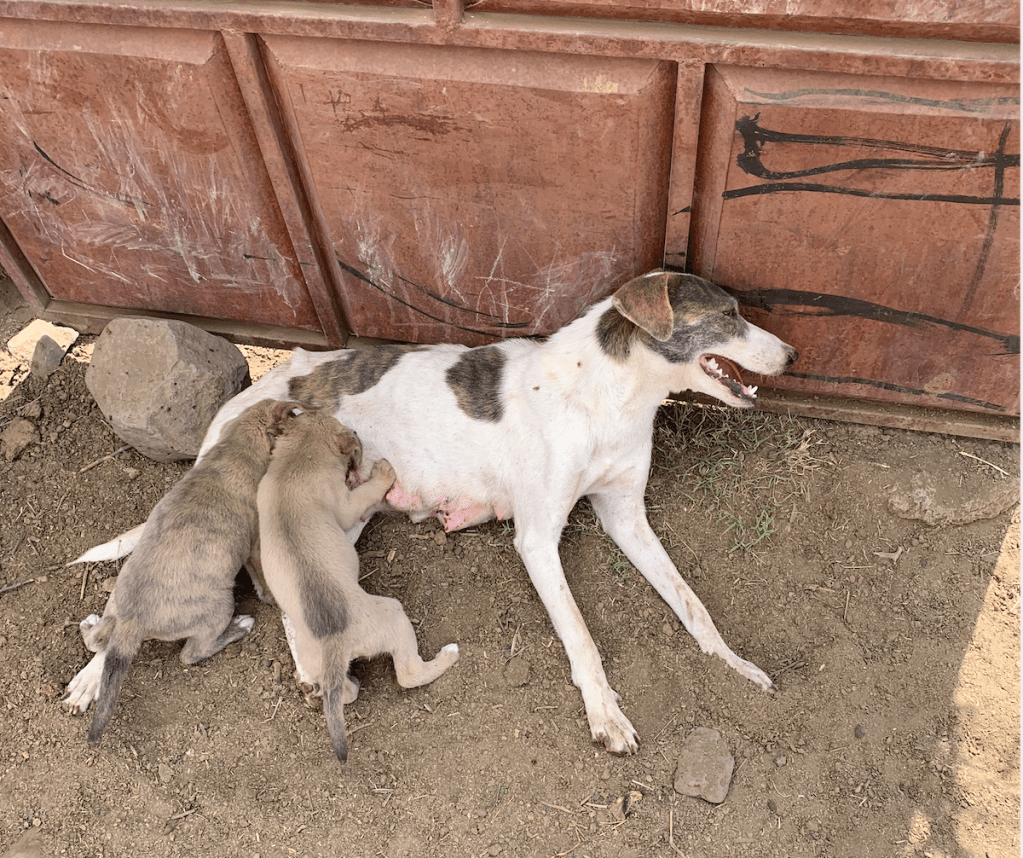
These puppies live at a Maasai boma close to baboon camp. Seeing puppies with people? I’m ok with it.
Life out here is difficult to deal with sometimes, both for the animals trying to stay alive and for myself trying to deal with when they don’t. While I am embracing the highs that come with spending so much time in nature, it has also forced me to come face-to-face with issues I’ve only thought about abstractly. It is hard to handle the fact that, even in this remote protected area, humans have made choices that have harmed it and there is nothing I can do to make it better. But I will watch. I will photograph. And I will try.
There are six social groups of baboons observed by the ABRP.
To make it easier on myself to learn how to identify each individual and to make
it easier for the animals to recognize me, I have spent the first half of my
time here with three groups and will switch over to the other three in October.
To celebrate/mourn this transition, I thought I’d do a little profile of each
of my groups. Obviously, I am incredibly biased with my favorite groups and
individuals within but luckily have a project that isn’t hurt by that, so I don’t
have to pretend to be neutral.
For example, this is Narasha, namesake of Narasha’s group. We are not friends.
Each group of baboons is made up of matrilines, daughters stay with the group they are born into and adorable social bonds are formed between adult sisters, their mothers and their youngest children. Males are a little more flexible and will migrate between groups every five or so years. These family units give each group some of its personality and, in some cases, family resemblance leads to groups having some physical characteristics in common as well.
This is a mom (Eclipse) seated and grooming her adult daughter (Ecoli). Ecoli recently lost her infant in the saddest day I’ve had out here but Eclipse is currently pregnant.
A female’s dominance rank is determined by her mother’s (and according to my senior thesis, not at all influenced by her size). Some matrilines are very highly ranking, and others get beat up all of the time. It’s a hard world out here!
Each group is named after whoever the dominate female was at the time the group was formed. When groups get too big, they fission into two groups and ranks have to be sorted out during the process. A low-ranking individual can jump into the smaller section of the former group and suddenly find herself at the top.
On the flipside, being highly ranked at one point in your life doesn’t mean you’ll be there forever. Of the six groups, only one is still named after the current top-ranking female. (As a side note, every adult male is higher ranking than every adult female. They are about 2/3 times larger and will always win when it comes to fights over food or space. Since my project doesn’t involve adult males, they are basically ~irrelevant~ to me.)
Acacia’s Group
Akim, son of Acid, the current reigning female of Acacia’s group.
Acacia’s is the group I have the most pictures of. They tend to spend lots of time in open areas and don’t move too much throughout the day, going from a grove of trees, to a single tree, to the open savanna and back to the trees to sleep. That makes it super easy for me to follow individuals and (hopefully) position myself in a good spot to get the shots I need. Despite that, they aren’t my favorite group. Due to a combination of schedule issues and other groups being uncooperative, I had to spend four days in a row with these girls and got very tired of seeing them every day, bumping them down on my list.
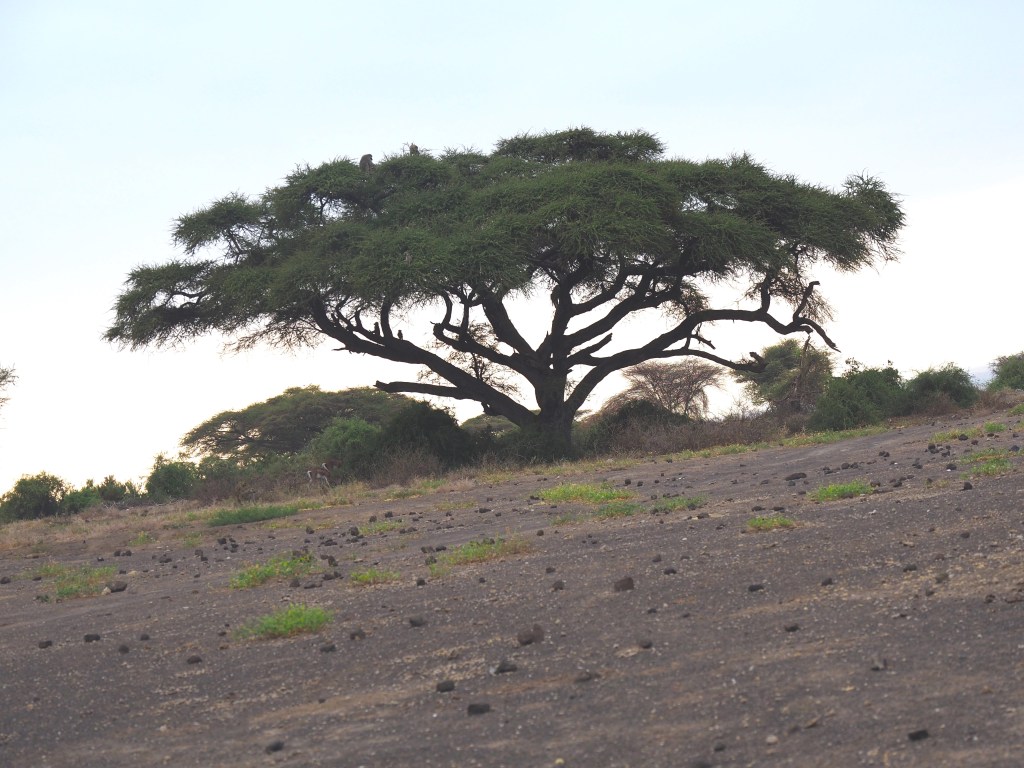
Fun fact: They seem to have a favorite single tortalis tree and for weeks, would spend at least some portion of the day up eating it’s seed pods. Somehow this one tree can fit all 50 members of the group and while they are up there, no science or photography can happen. We would just sit in the car and wait for them to come down or go home all together.
Never thought I would have a least favorite tree in Africa but here we are.
Not-so-fun fact: The only group named after an individual who has died. Her daughters still run the show though!
Favorite animals in Acacia’s
Taka
Early in the morning or later in the afternoon, it is possible for animals to see my lasers on their fur or on the ground next to them. For the most part, when that happens, they FREAK out and run away, or at least get jumpy for a little while. Taka has now seen my lasers three times and never once reacted. You go Taka.
Apple and Kopa
It’s not uncommon to see males following around females when they are at their most fertile. Strong males can fight for exclusive mating rights and will father lots of children when they are in their prime. It’s way less common to see an older male following around a female when she isn’t ready to mate…unless they are best friends like this duo.
Dibble’s Group
These girls have been my favorite baboon group long before I
ever saw them in person. For whatever reason (walking too much? genetics? low food
quality in their home range?) the females in Dibble’s tend to have long limbs,
lean bodies, and thin fur. While this makes an odd-looking animal, they are the
easiest to measure. Last winter when measuring baboons was all I did, they stood
out.
Unfortunately, they are considered the most frustrating
group to study. They often bump into other groups and get pushed out of spaces
and they spread out a lot. Since it takes so much of the observers’ time to
find and census them, they project is likely going to drop them as an observed
group in the next month or so. They have some pretty shy individuals who will
not be sad to see us go, but I will be.
Fun fact: This group was the first to be ok with me getting close enough to them to photograph, even though they tend to have the most problems with new people. The observers said it was “weird”. As my friend Lexi put it, “you have the same nervous energy as the baboons. They can sense it”.
Not-so-fun fact: A few years ago, one of the males in this group killed and ate a goat. The villagers it belonged to retaliated by killing half of the baboons. While the numbers in the population have recovered, the fear has not gone away. When Dibble’s group sees or hears Maasai, they are out of there. This makes it hard to follow them but they are the only group I don’t get annoyed with for running away. They’ve earned it.
Favorite animals in Dibble’s
Eclipse
I once described Eclipse as “my best friend in Amboseli”. I stand by that. Whenever the group is on the move or in a tree or in a spot bad for photographing, she seems to be always standing around me. I have all the pictures I need of her at this point but it’s still reassuring.
Eponine
Naming baboons is hard since there are about a million rules to follow. Eponine, the name of a stand-out character in Les Miserable, my all-time favorite story, was still available and the 15 year old version of myself has never been more proud.
Narasha’s Group
A whole host of factors has combined to make Narasha’s group
my #1 enemy. Maybe it’s because they are always fighting with each other and
being around them is loud and stressful. Maybe it’s because it came down to
Narasha’s vs. Dibble’s for who would be dropped and my favorite girls lost. Maybe
it’s because Narasha’s is supposed to be the most habituated to humans and they
just hate me personally.
In theory, this is a really cool group. They have very strong males and bulky females and can push other groups out of their way. They spend a lot of time in lava rocks left over from Kilimanjaro’s last eruption which means they eat a lot of bugs and I get to spend time in a really unique ecosystem. Yet somehow…
Hard for people to walk in but the animals make it work.
Fun fact: Narasha’s group has the two longest females in the population based on the pictures we measured last year. Narasha herself looks like the strongest, healthiest female around so she got to wear a heavier GPS collar that measured her movements in 3 dimensions and how quickly she made them. (Side note: recovering that collar was my worst day in Amboseli but that is a story for another day entirely.)
Not-so-fun fact: When they go up in the lava rocks, we usually have to stop following them because the vehicles can’t drive on them. No vehicles means that if an elephant decides he doesn’t want us there, we don’t have a way to escape. The base of the rock hill is an elephant highway which makes it too risky most days.
Favorite animals in Narasha’s
Wudu and Wiper
Even though this group is not my favorite, this little cutie sure is. She has a weirdly short tail and is super fuzzy even though her mom has almost no fur. Her mom was also measured as the largest female baboon last year so I am interested to see what this girl grows into.
Kokoi
The only male I can identify. Baboons in our area are usually a hybrid of slender yellow baboons and the fluffier Anubis baboons. Kokoi is basically all Anubis so his face is very fluffy and he is darker than most.
He is also insane. This group fights a lot and he is almost always in the middle of it, fighting for meat or just messing with females. I don’t like it because the animal on the losing end makes some terrible sounds and tend to be my girls, but I appreciate that he has committed so fully to his role as an instigator.
When I see an animal hurt or dying, I am very much a 22-year-old girl, a 22-year-old-girl who looks away when the predator finally catches up to the prey on Planet Earth. After the animal is dead, however, my scientific side comes out.
My tent in camp is right next to the temporary graveyard and until now, my only neighbor was an unknown female who died in April, before I arrived. Obviously, I didn’t – I don’t – want any of the individuals I’ve been spending time with to die. But an unknown? Ehhh, we can handle that. Plus, part of me hoped I would get to see the process that happens when a baboon dies during during my five months.
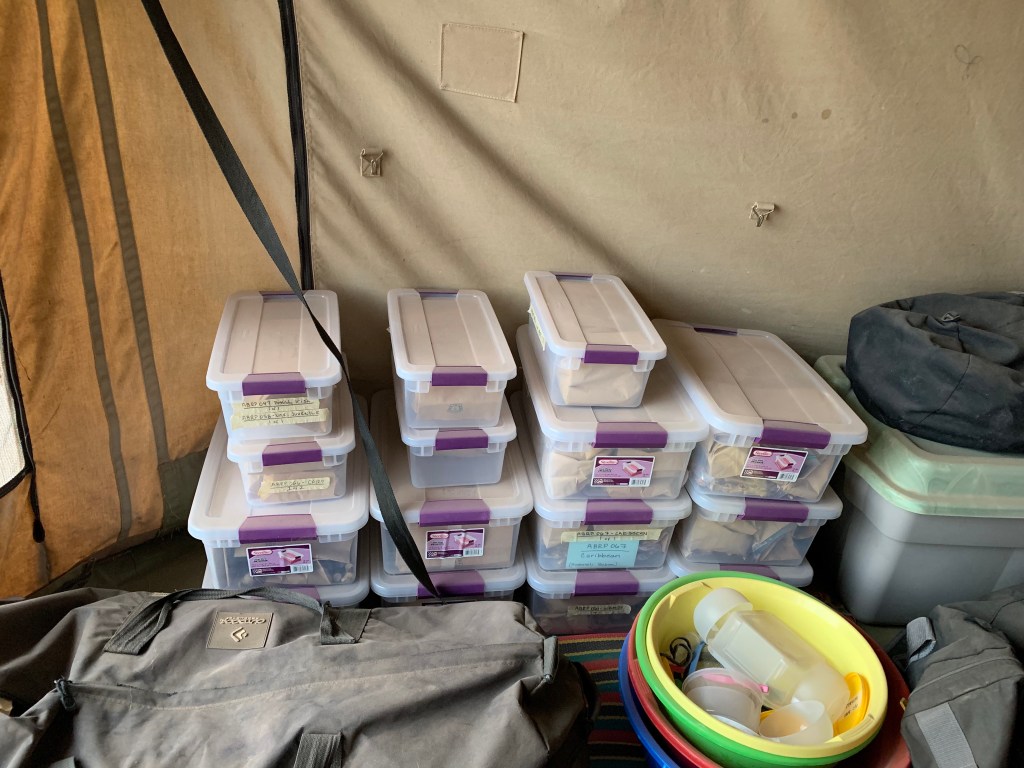
While many researchers involved in the Amboseli Baboon Research Project study the behavior and health of living baboons, there are others who focus on what we can’t see while the animal is alive. Whenever a baboon body is found in our area, we recover it and bury it in camp so those scientists can look at the bones further down the road.
And when they aren’t being studied, they live in these shoeboxes.
Today when we were out in the field, one of the Maasai scouts
employed by the project came over to tell us where we could find a dead baboon.
These scouts live and graze cattle in the area, and while they’re at it, help
mitigate human/baboon conflict and let us know if anything is happening to our
animals. We wrapped up what we were doing, cut our day short and went to track down
a body.
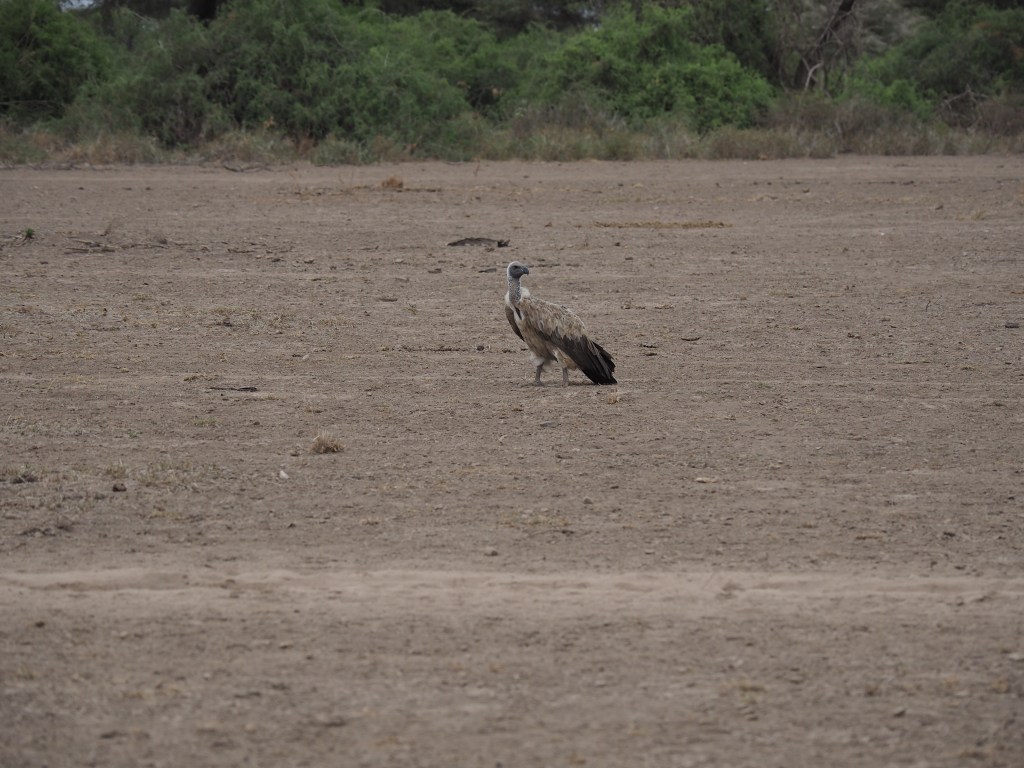
This vulture was not circling our particular animal, but it did help set the scene as we drove over
Walking up to a dead animal that has been out in the sun
smells exactly like you would think walking up to a dead animal that has been
out in the sun would smell like. This baboon had clearly been eaten, and likely
killed, by something like a hyena, common in the area. The hyena had eaten a
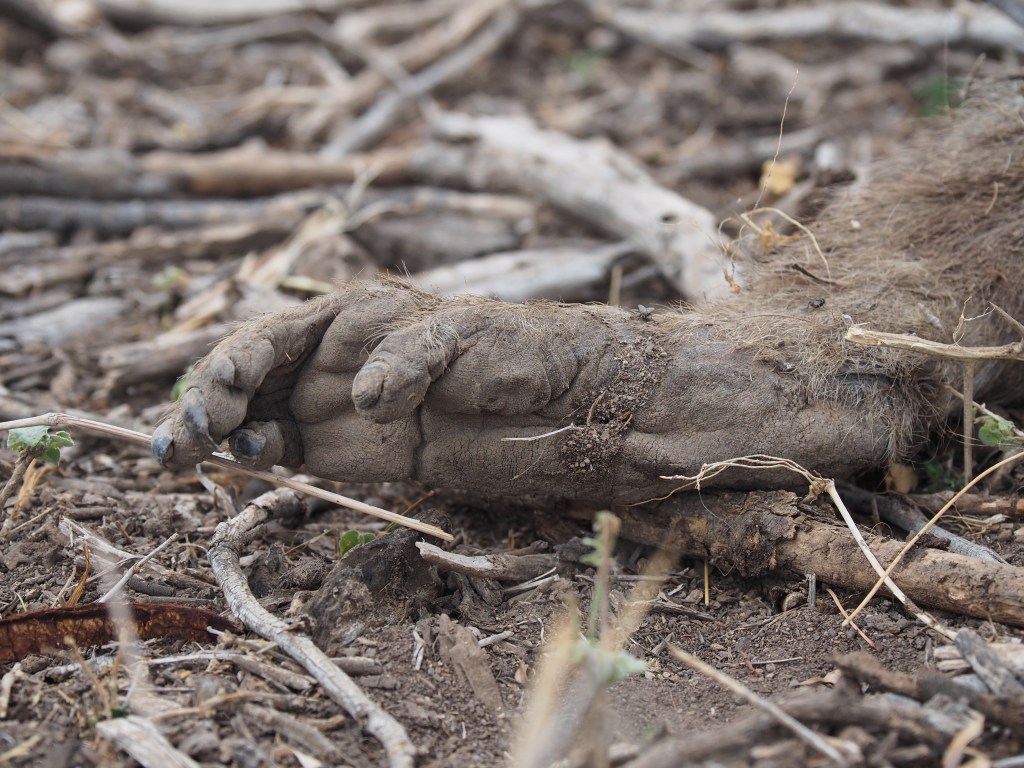
lot of the baboon, leaving us with skin still on the arms, head, tail and one
leg. Enough for Kinyua, the head observer out with us today, to determine it was
an older male. Tails are a distinctive baboon identification tool and his best
guess was a baboon named Ganja. This particular baboon had most recently lived
with a group we don’t follow but had stopped by one of our study groups in the
past, earning him his name. My photogrammetry skills have made me head field photographer,
so I got to take crime scene pictures.
I’ll spare you all the graphic full body pictures but feel free to message me if you want to see a half-eaten baboon!
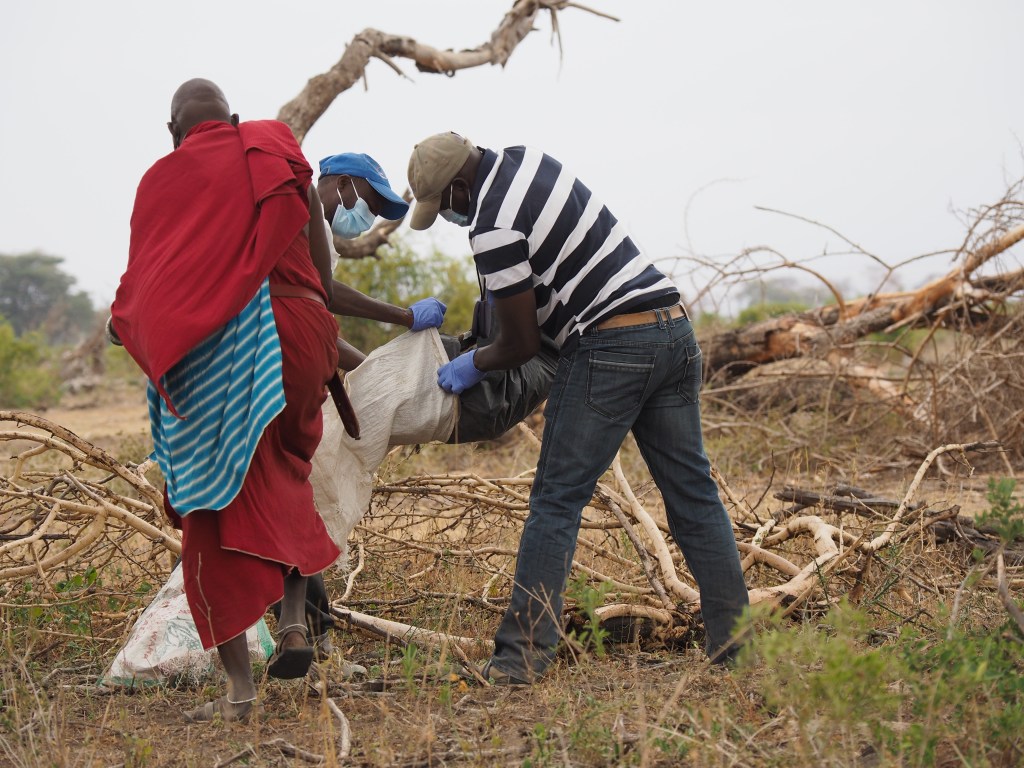
Then the fun began. Gideon (our driver), Kinyua, and the
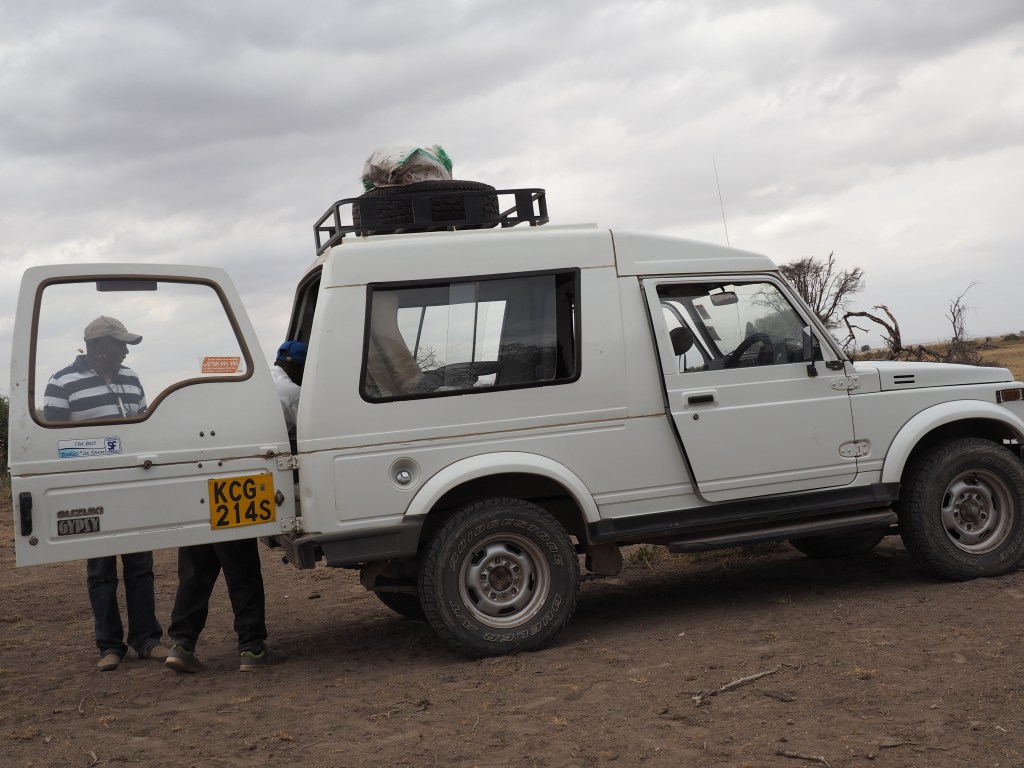
scout who found the body wrapped it up in old grain bags and plopped it right on
top of our car, leaving Chelsea and I out of the action.
We were not sad to miss this.I commented that it was just like wrapping up a Christmas tree and putting it on the roof, forever ruining a holiday experience for myself.
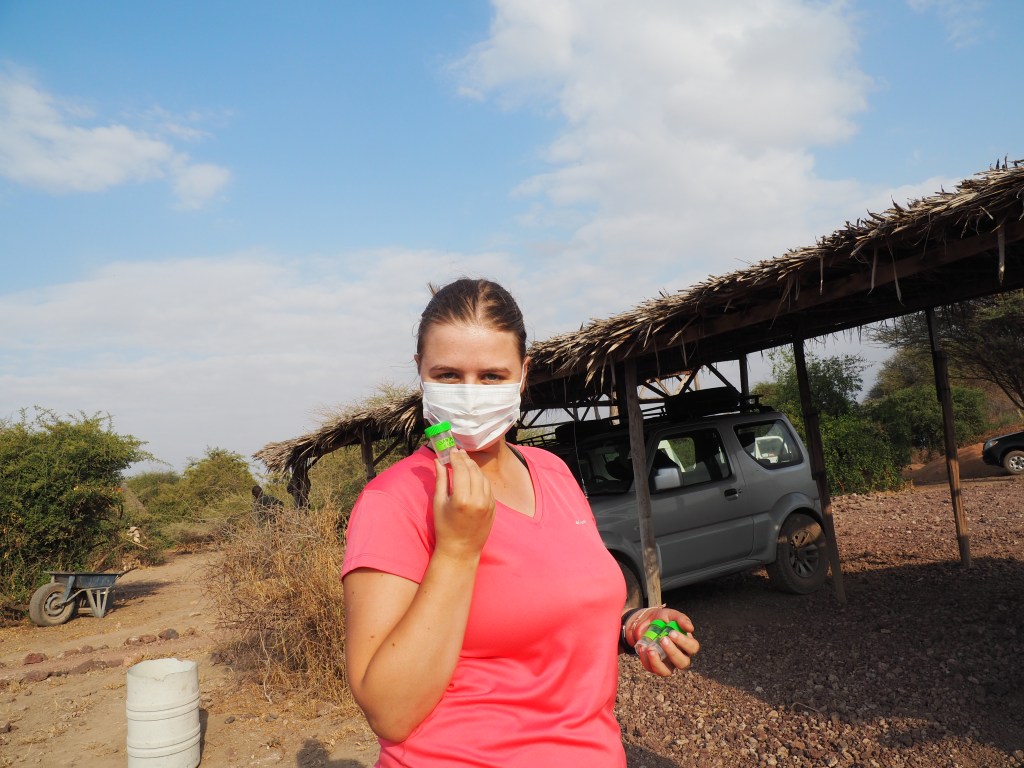
When we got back to camp, Chelsea labeled sample tubes for skin, muscle, and hair and I was once again called on to photograph the body.
A scientist!
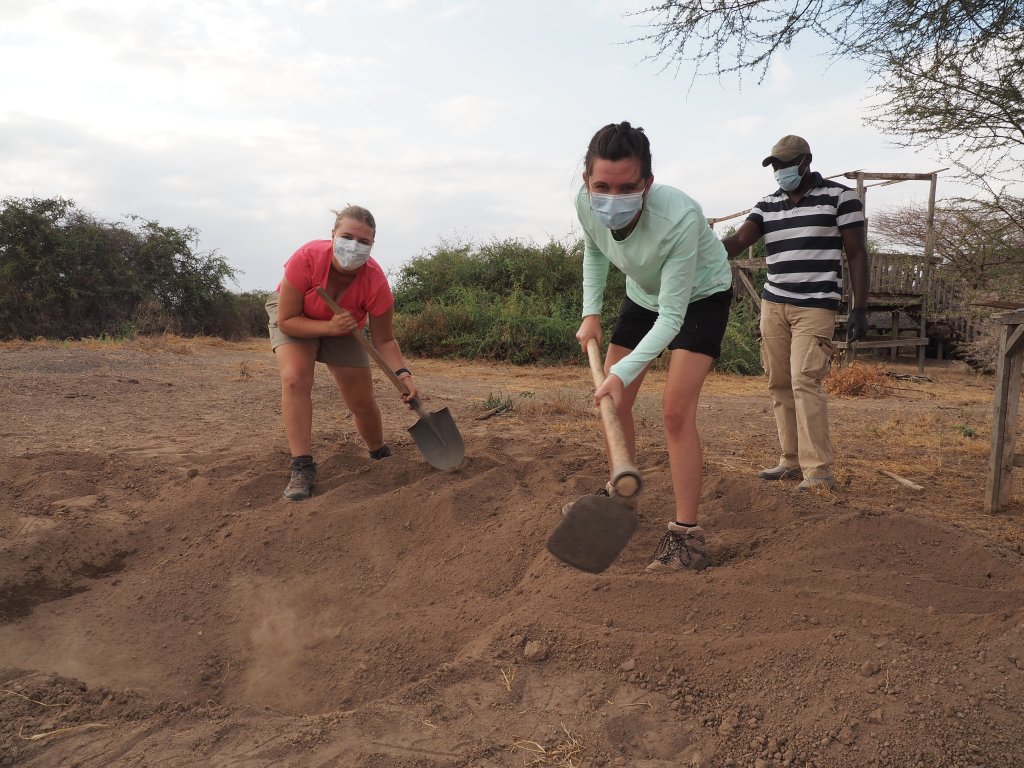
After samples and photos were taken, the body was wrapped up in mesh netting which lets insects clean the bones but keeps them in one spot. His hands and feet were wrapped in small drawstring bags, so the tiny bones don’t disappear when it comes time to reassemble them a year from now. While we were on our way back, camp staff had been hard at work digging a hole in the dry dirt. Ganja was plopped down and we got to work filling it in.
While the observers are freakishly good at identifying live baboons, even they struggle when it’s not all there. Luckily, there is a whole genetic database that should be able to check and confirm this is Ganja. For now, the grave gets a question mark
Putting the Americans to work.
If you had told me at the beginning of my senior fall
semester that at this time next year, I would be burying a wild baboon in a
camp in Kenya, I would have thought you were crazy.
Every day, the full time research team drives out to observe 2 or 3 of the 6 study groups in the population. While there are at least 10 groups of baboons in and around the Amboseli basin, these 6 groups have been studied since they formed. That means the animals are habituated to the presence of the observers, letting us spend time with them without spooking them away from their food or changing their routines. We go out in 2 shifts every day. The early car leaves at 5:30 am and leaves to come back to camp at 11:30. The other car leaves at 12:30 and comes back at 6:30. Mornings are cooler and preferred by most so that’s the schedule I’ll dive into today!
4:45 am: Wake up! My first alarm goes off and immediately gets snoozed. Some days I fall back asleep, other days I stay up and listen to the hyenas, lions, or elephants I can hear just outside of the electric fence that keeps them away from us.
5:00 am: I get ready for the day in my field clothes, plus a jacket or sweatshirt. While it will get up to around 85 degrees F later, nights are only about 40.
5:30 am: The morning car leaves with me, a senior observer and a driver.
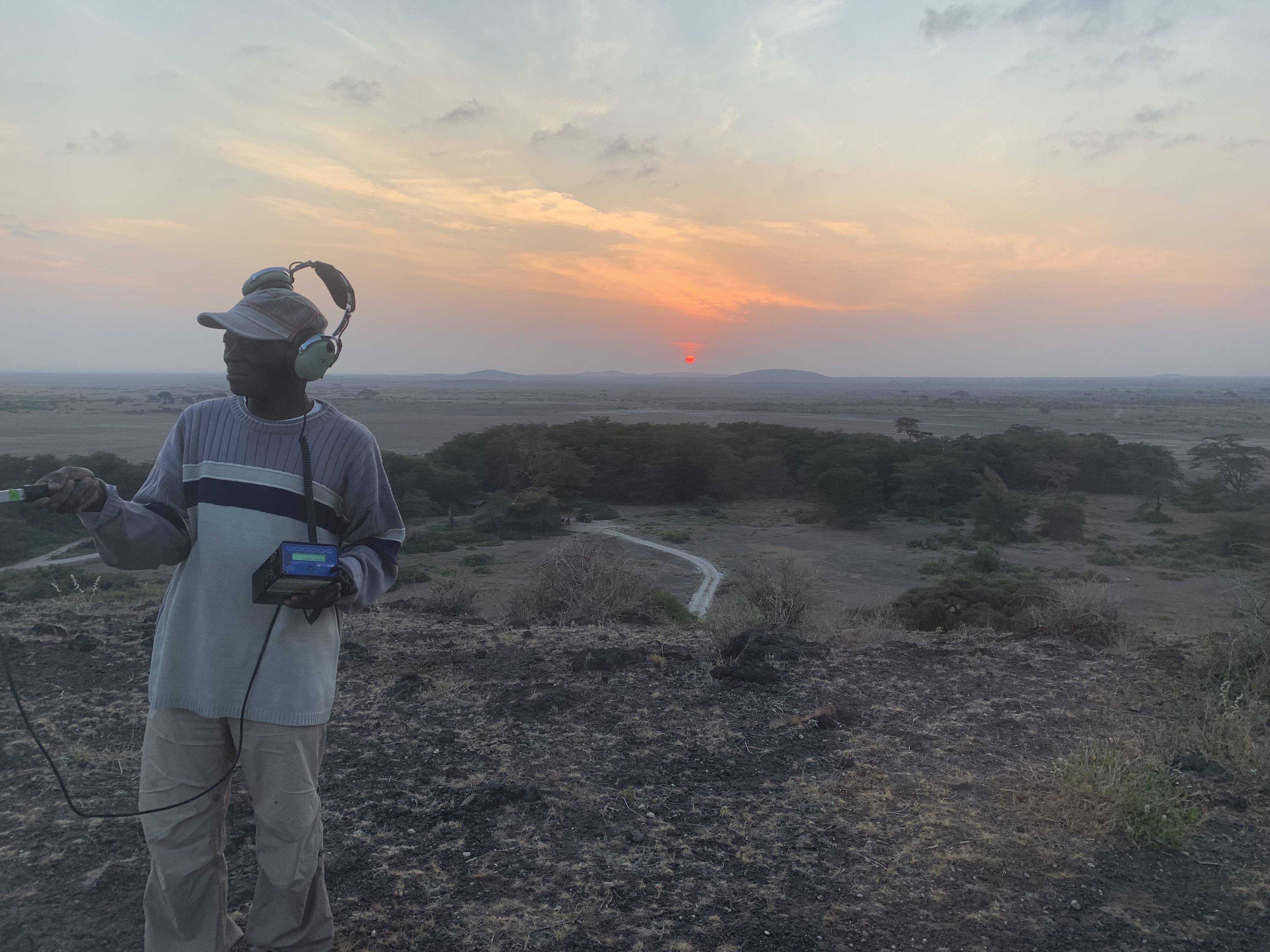
6:15 am: We are close to the baboons and depending how cooperative they are, we either find them or drive around listening to radio frequencies from the collars select individuals wear in each group.
The best part of driving up to the top of the hill to listen is the sunrise views.
6:30 am: Find some baboons! Every night, they sleep in groves of trees. They wake up and head down just after sunrise which usually gives us a few minutes to eat breakfast and drink tea before we need to start following them. If they stay in the trees too long, I wander around and take pictures of other animals, cool birds, interesting tracks or any bones I find, basically building my Facebook album.
7:00 am: Baboon observation time! The senior observer does a census of all individuals in the group. Is everyone accounted for? Are there any new faces? Males leave their group every few years so sometimes males that were in one group wind up in another.
The observer also looks for any injuries and makes notes about the females’ reproductive cycles. Later in the day, they switch and follow specific individuals, recording information like what they are doing, the plants they are eating, and who they are interacting with.
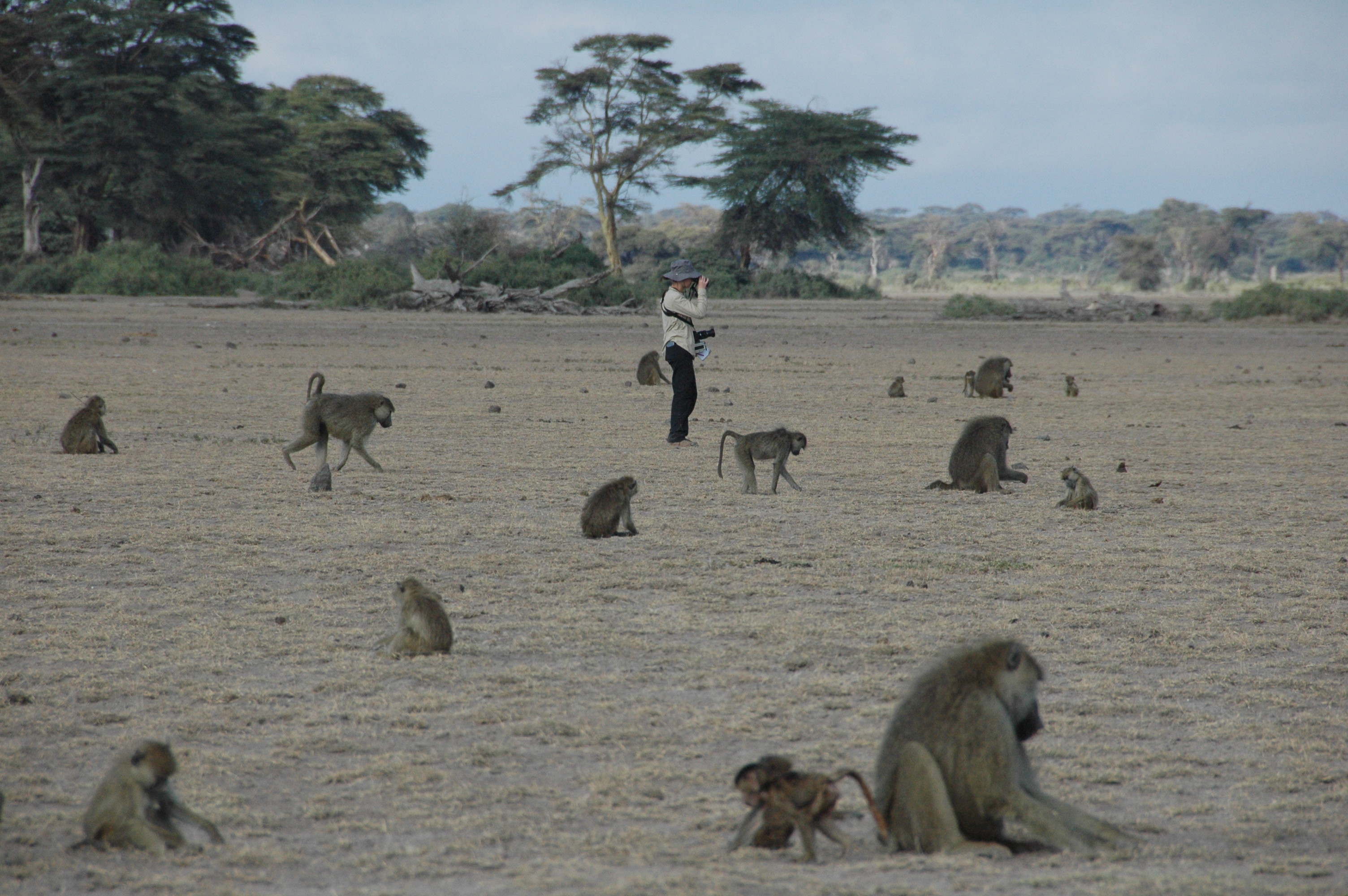
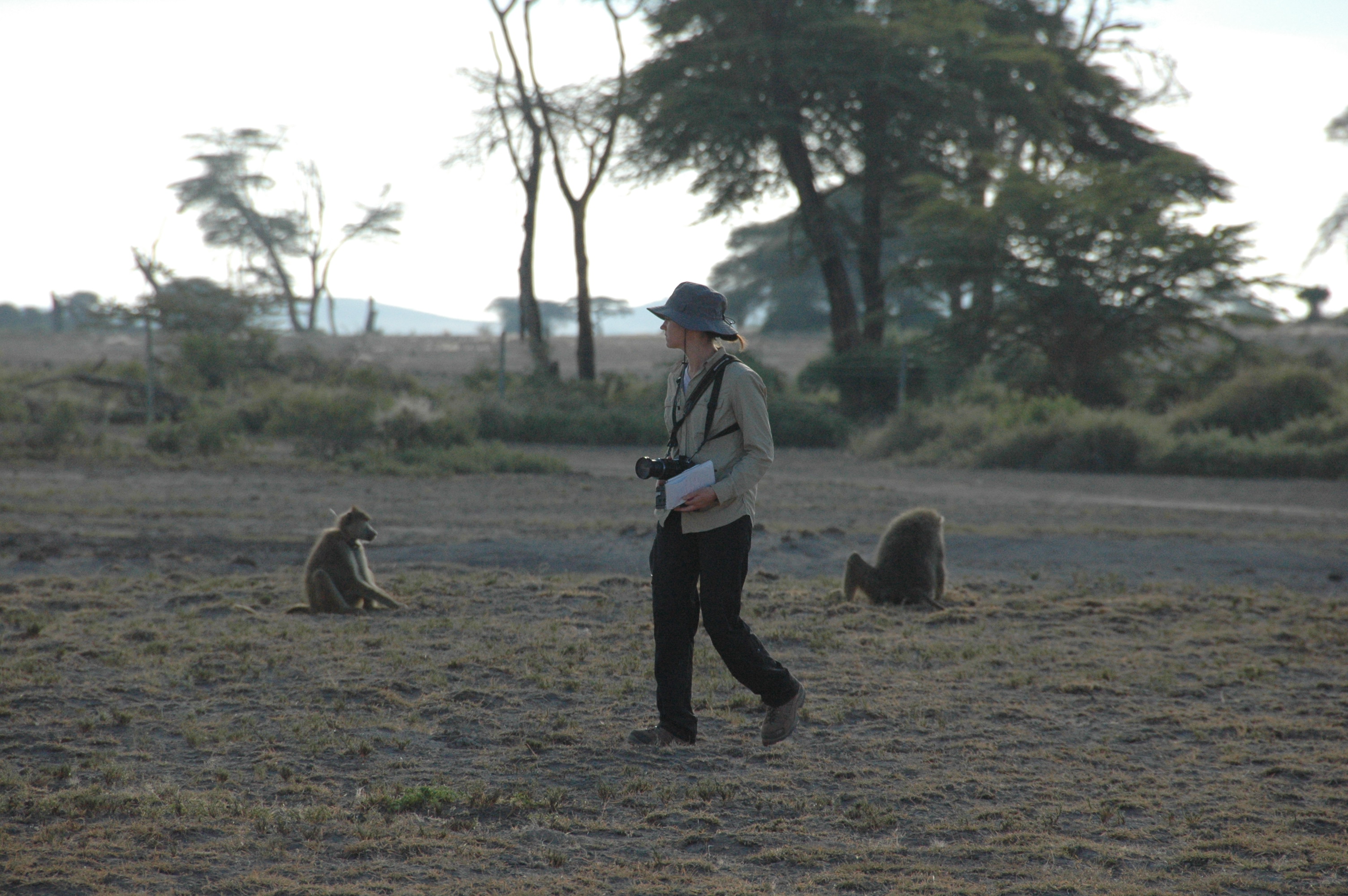
Meanwhile, I look for specific females and spend 20-30 minutes stalking them. I have a list from Emily of high-priority females and, for the most part, have learned how to identify them. I try to get within about 30 feet of the baboons and wait for them to stand in the specific posture I need for good measurements. Sometimes that’s easier said than done!
Other times, they let me right into their space.
While we are on foot, the driver moves the vehicle, so it stays in sight. He is also looking out for elephants or buffalo and if either get too close, we head back to the car.
11:30 am: We leave the group and go back to camp.
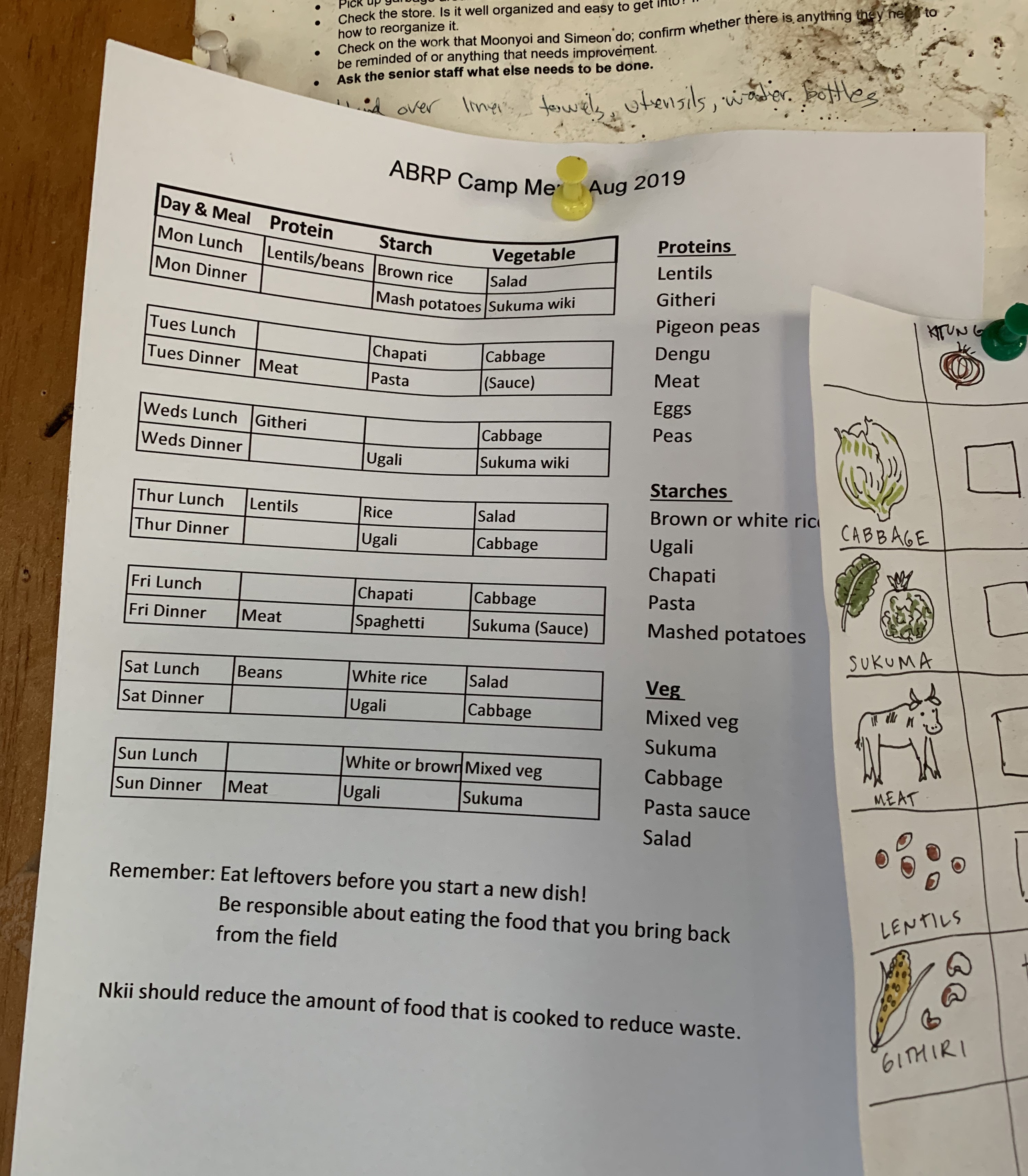
12:00 pm: Lunch time! Meals follow a weekly schedule so we always know what’s coming up next.
Our current menu.
1:00 pm: Shower. While camp doesn’t have running water, it does have a solar heater, making hot showers possible.
2:00 pm: I back up all of the pictures I’ve gotten that morning and sort them into folders for each individual. On the weekend, I’ll sort through the folders and decide what pictures meet our measurement criteria. Of all the pictures I take, about 5% actually get sent to Emily for measuring.
3:00 pm: Nap/reading/hanging time.
5:30 pm: Pre-sunset crafting! The heat of the day breaks about an hour before the sun sets so I go outside my tent and knit or embroider and watch the animals walk by before it gets dark.
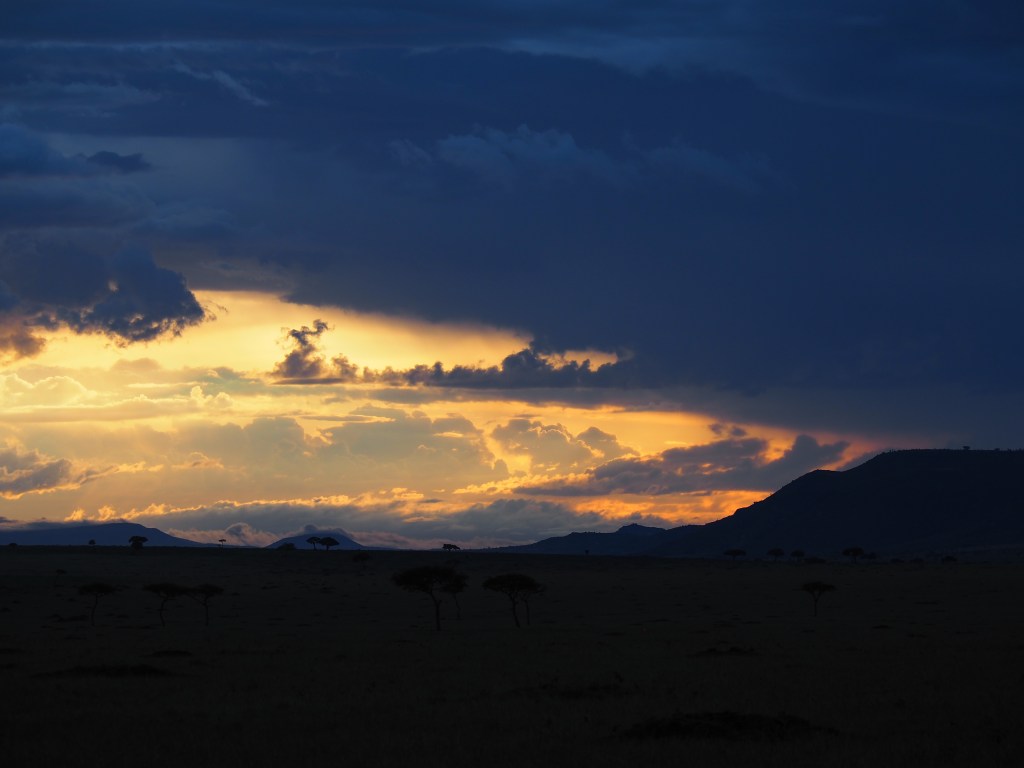
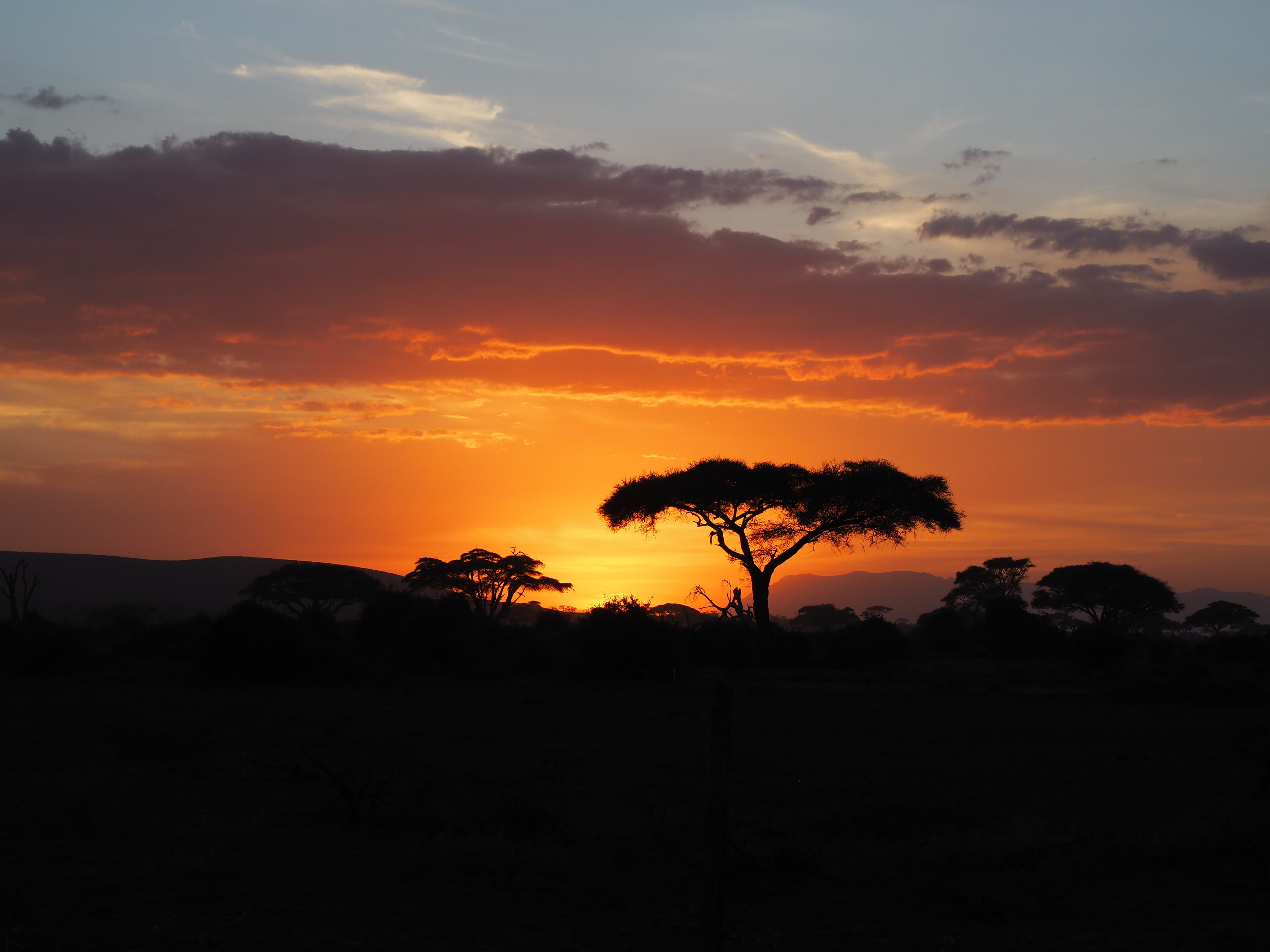
6:30 pm: Sunset. Every night, I watch the sun set behind the hills. Honestly, sunsets in America are a little prettier (since there are more clouds [from air pollution]) but here you can see so much of the sky it is pretty impressive. The timing is predictable since I’m only 150 or so miles south of the equator.
The best sunset thus far.
6:40 pm: Internet hour. Chelsea, the other American research assistant, and I meet up in the office to check email, social media, and message our families or whoever else is awake and available at 9 am their time.
7:30 pm: Dinner time!
8:30 pm: Bed time since the next day’s wakeup is far too early.
For the first five months of my post-Duke life, I am in
Amboseli National Park, Kenya, working as a field research assistant for the
Amboseli Baboon Research Project. What does that mean?
It means I run around in super cute outfits with monkey friends.
Basically, field research assistants are scientific mercenaries, people hired to do the on-the-ground work that their higher-ups can’t do. In my case, I help to collect data for Emily Levy, a graduate student at Duke in the Albert’s Lab. Like most of the lab, she is looking at the long-term effects of early life adversity (things like being born in a drought, losing a mom, having a sibling close in age, and other factors that shorten the lifespan of a baboon). Part of her project involves looking at the body size of individuals, especially adult females. If these things happen to you, are you smaller than the other baboons your age? Are you smaller than your mom or sisters? That could be a factor for shorter lives.
Measuring wild animals is tricky, you can’t really ask them to stand against a tape measure. In recent years, biologist have figured out how to measure physical features using photographs and parallel lasers, a combo called parallel-laser photogrammetry. You take a picture of an animal with little laser dots that are a set distance apart and that becomes your tape measure. If there are 62 pixels between 4 centimeters, how many centimeters are 721 pixels, or the length of the baboon?
An example of a high-quality photo we can use to measure the length of the baboon. The distance between the two farthest dots are four centimeters, which is our scale.
Every day, I take those pictures that Emily then measures
back at Duke. Last year, it was the opposite, she took pictures over the summer
here in Amboseli and we spent my senior year measuring them. That was the first
time body size data was recorded for so many individuals in this population.
Since they’ve been studied for almost 50 years, new ways of looking at the
animals is really exciting. It’s been fun to help collect it and I can’t wait
to see what we learn from these photographs!
 Anna in Amboseli