What makes this baboon different from any other baboon?
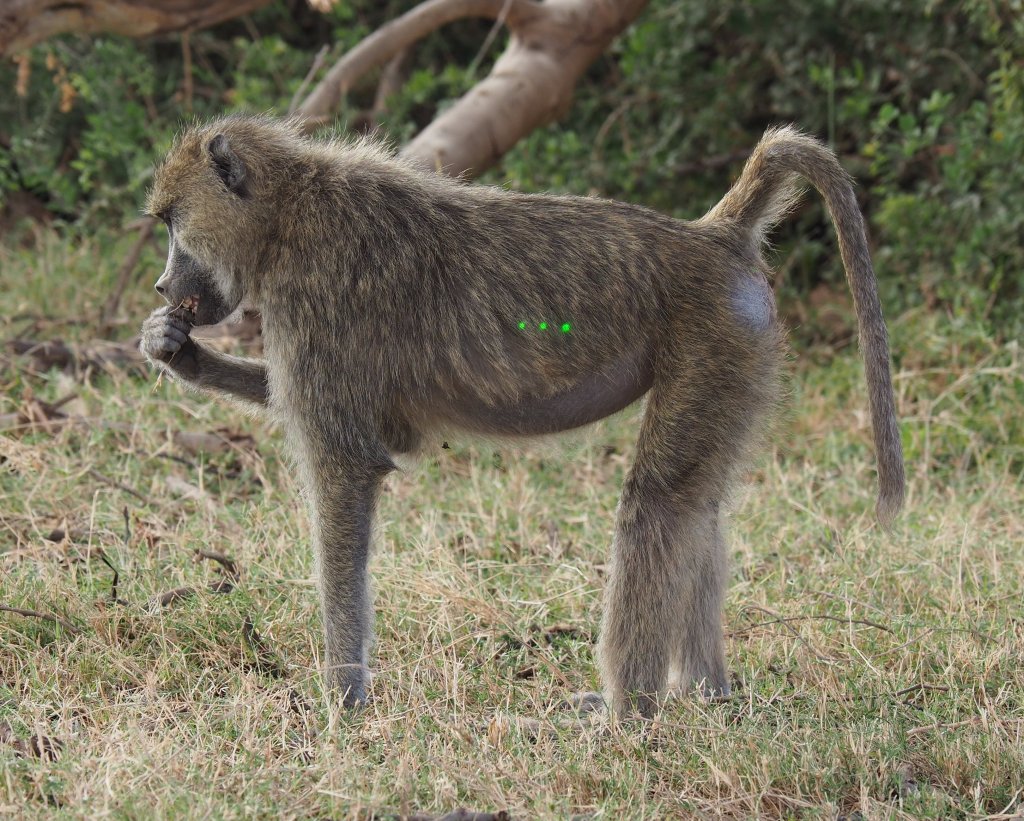
That’s a question I find myself asking basically constantly while out in the field. To make sure I get photographs of as many individuals as possible, I have to look for specific animals I haven’t captured yet. To do that, I have to have some idea of what makes them unique. Observers on the team have to know every individual by name for a daily census. With their experience, it takes only a glance at a baboon in the field or even from a picture I show them on my camera after I’ve taken pictures of an animal I don’t know. How do they tell baboons apart so easily? Let’s try and figure it out.
What’s the difference between these two baboons?
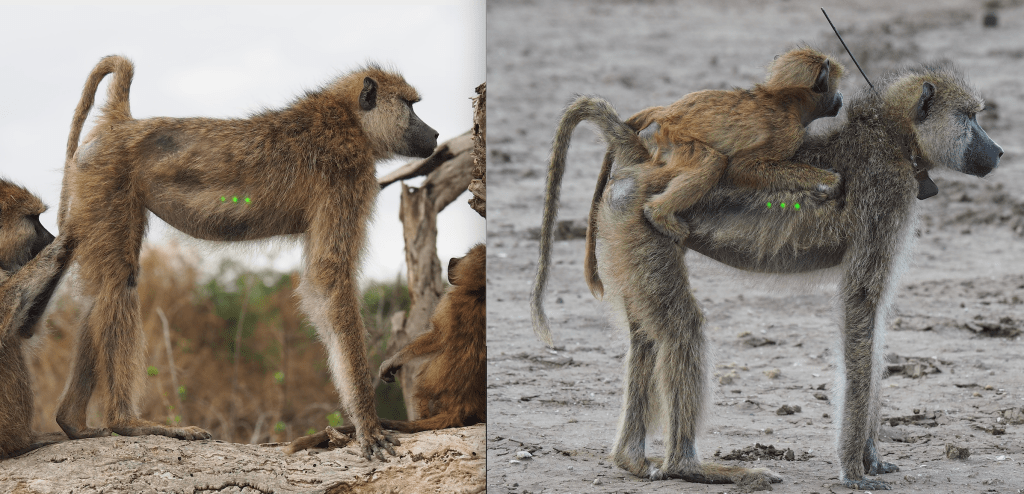
That’s easy, one is wearing a collar. In each group, 2 – 5 individuals wear a radio tracking collar. That makes life way easier, especially when looking at two basically identical sisters, like Telly and Tibe.
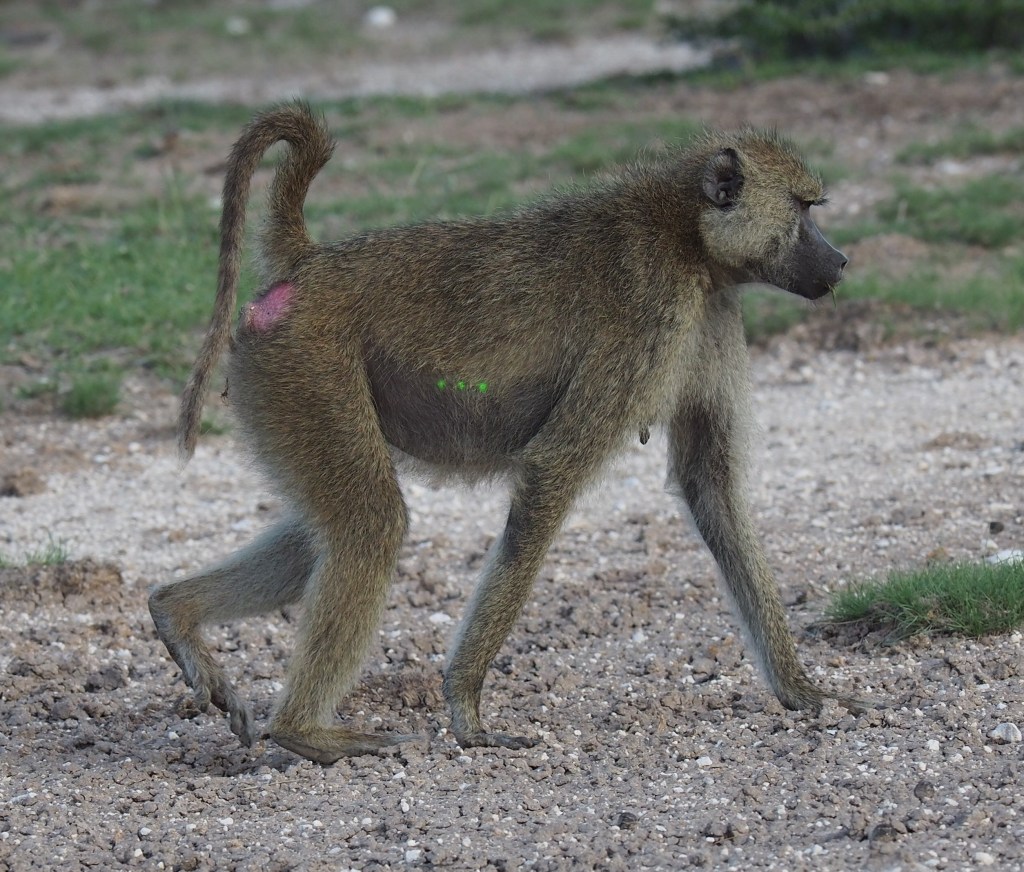
Life stages can also help identify a baboon. When a female becomes pregnant, the exposed skin under her tail becomes bright, bubble-gum pink. This builds up for the five months of pregnancy and can take some time to fade after the birth of the baby.
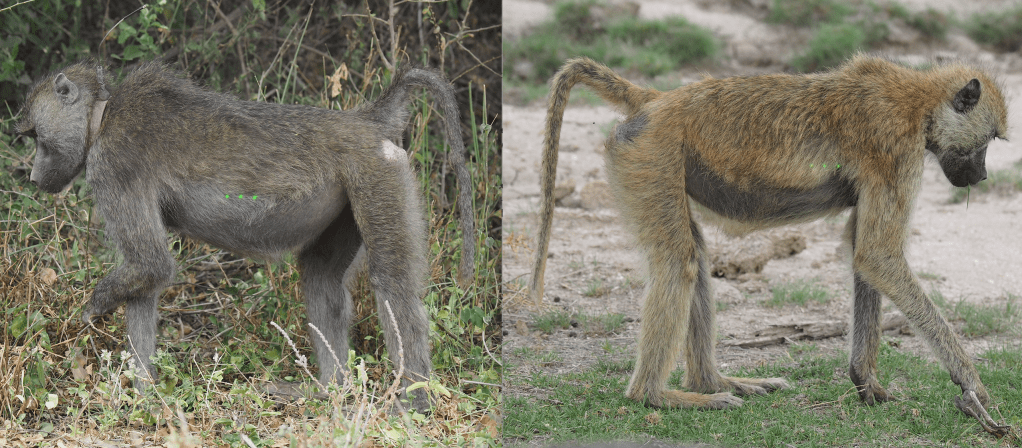
Most importantly, each baboon has, to quote my advisor, “something that makes them weird”. Some have crazy long arms. Others have tails that stick straight out or curl funny. Since our population has hybrid animals, fur color ranges from dark grey to bright yellow. Others have faces that look perpetually grumpy or sad, which is a very scientific way to double check an ID you think you know.
Taking pictures of baboons can be really hard. They don’t listen when I ask them nicely to pose for me and have the nerve to climb trees for food instead of eating bugs and grass on the ground. I can’t control how cooperative the animals are but working to learn identifications is something I can do and enjoy doing. It’s a fun puzzle to solve and knowing their names makes me feel closer to the animals I spend my days with.
Here are some more baboon pairs just for fun. Can you spot the differences?
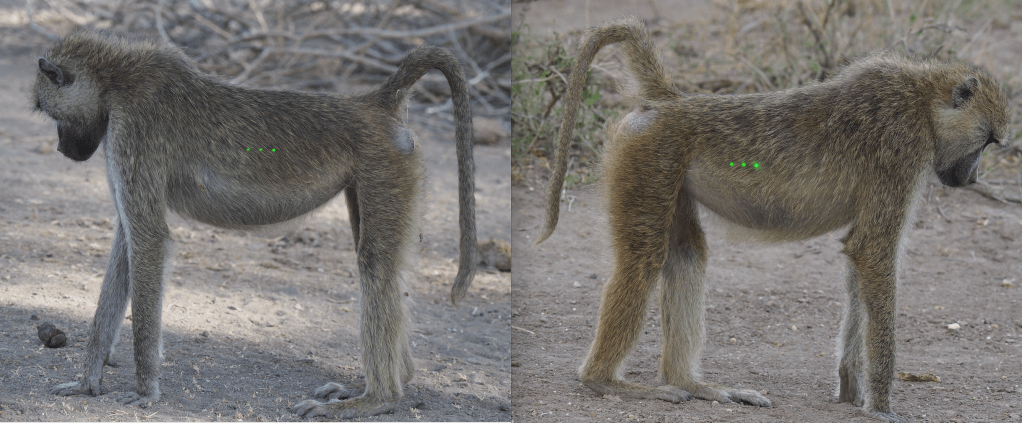
Observer: Ok but they don’t.
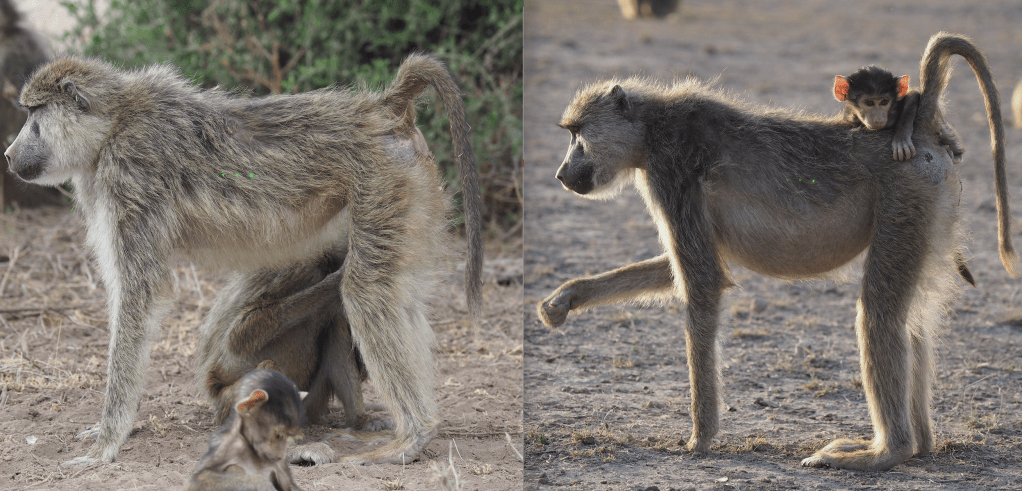
No, the tiny baby on Yeller (right) doesn’t count, Yai’s (left) has one too. This is a mother/daughter matchup which means when their newests kids are playing together, one is the other’s aunt. Baboon family trees are a tangled web.
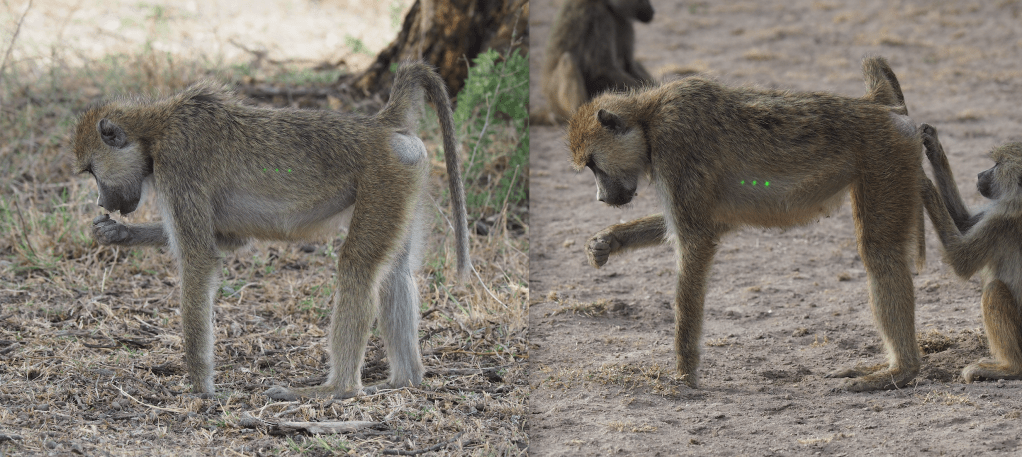
 Anna in Amboseli