Last week, I went with Chelsea to Maasai Mara National Reserve, located to the north of Amboseli along the Tanzanian border.
We camp we stayed in is home to Michigan State’s Mara Hyena Project. Like with the baboons, the hyena team hires recent college graduates as research assistants. While we went to see more of Kenya and a park with more food, water, and wildlife than the one we call home, we also went to spend a few days with girls our age doing a similar job.
From the moment our bush plane landed, we knew we weren’t in Amboseli anymore.
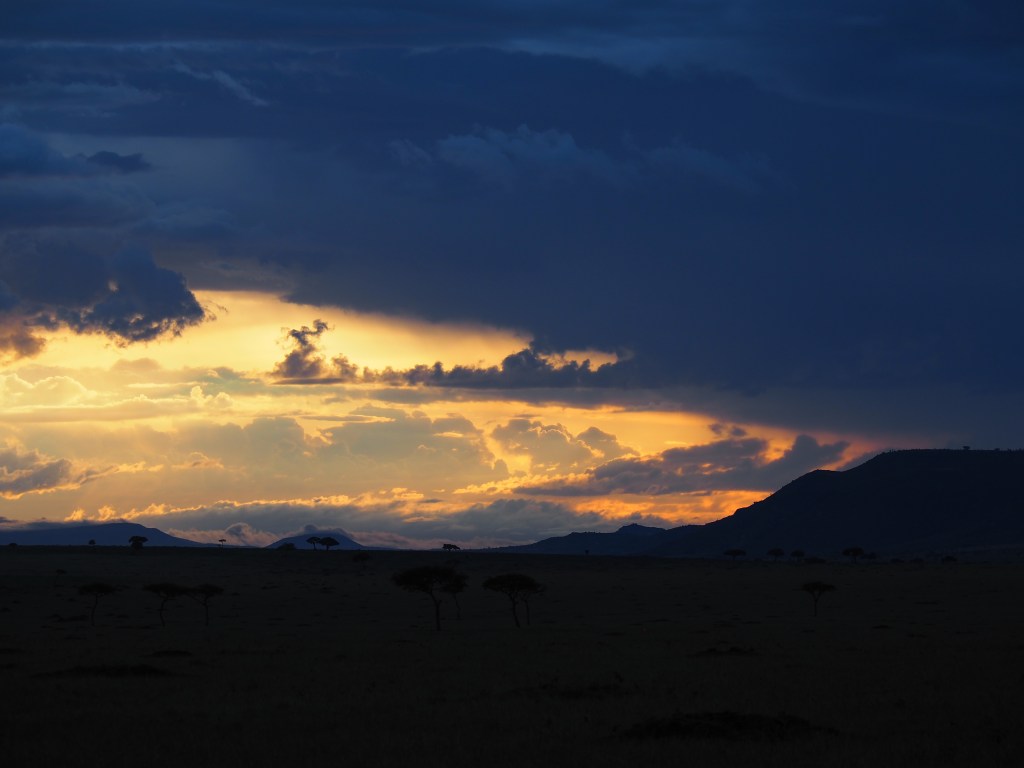
While a bad rain year has left our park in a state of drought, Maasai Mara is full of rolling green hills and forest lined rivers. While Amboseli looks more similar to pictures of Mars than anywhere I’ve seen on Earth, the Mara’s landscape reminded me of rural Western North Carolina or the foothills of Kansas. That is, until we saw the animals.
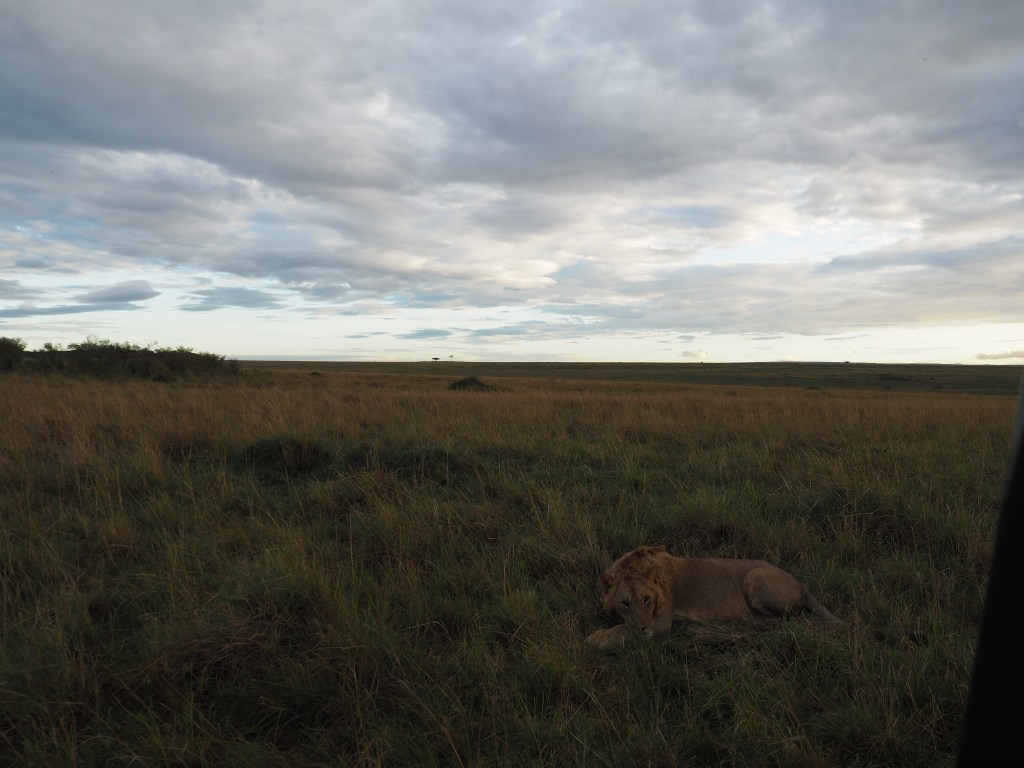
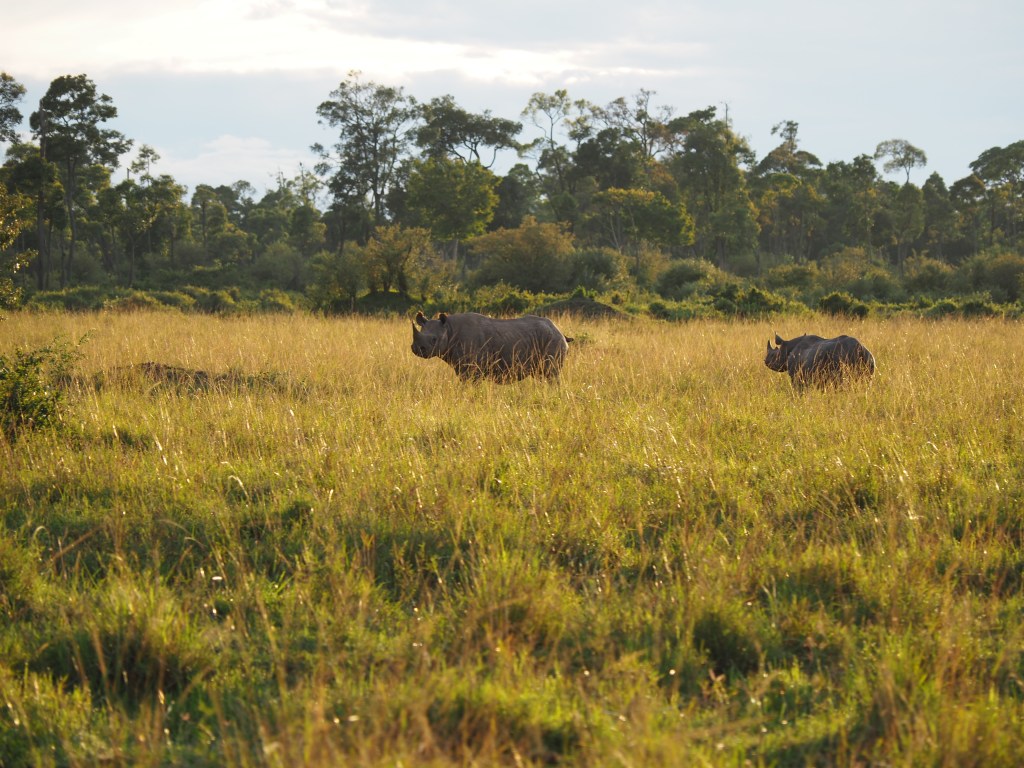
On each of our three days, we spent mornings on game drives looking for cats and other animals we hadn’t been lucky enough to spot yet in Kenya. On each day, we saw a different mammal, rhinos to cheetah to leopards. On the rest of the drives, we saw plenty of topi, eland, zebra, impala and giraffe.
Maasai Mara is famous for hosting the Great Migration as over a million wildebeest move from Serengeti National Park across the Kenyan border. We missed these giant herds by less than a week. I was sad until I realized seeing the wildebeest means seeing them attempt The Crossing over the river where they fight against hippos, crocodiles, steep riverbanks, and lions waiting on shore. Every year, about 10% of the herd fails to complete the migration. You know those horrible Planet Earth scenes? Yup, that’s the Mara. While we missed the living animals, plenty of carcasses and happy predators showed the signs of their journey.
Of course, we couldn’t visit the Mara Hyena Project without meeting the hyenas themselves!!
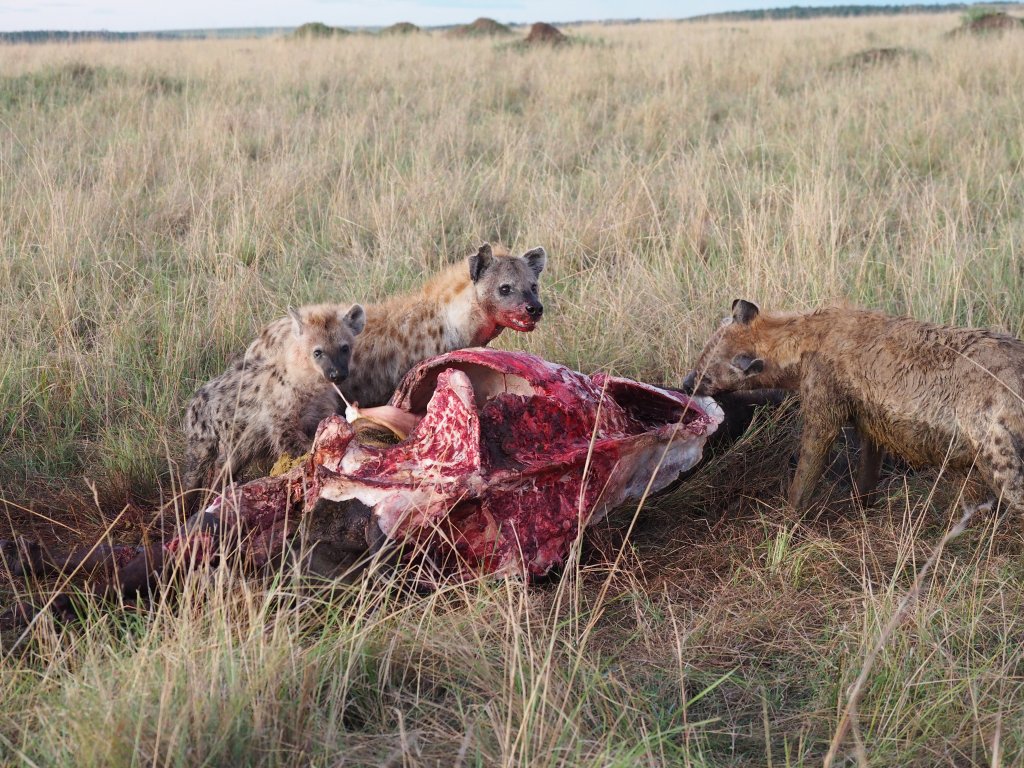
I’ll be the first to admit that hyenas are one of the ugliest animals in the entire world. Their necks? Too long. Their walk? Crazy awkward. That being said, they are incredibly interesting as a study species and a super important predator in the savanna ecosystem. That’s right, hyenas aren’t scavengers any more than lions are scavengers. When you have 50-80 clan members to feed every week, you’ll take meat wherever you can get it. I may not be Team Hyenas-are-the-Cutest but I am Team Hyenas-are-Misrepresented-in-the-Media.
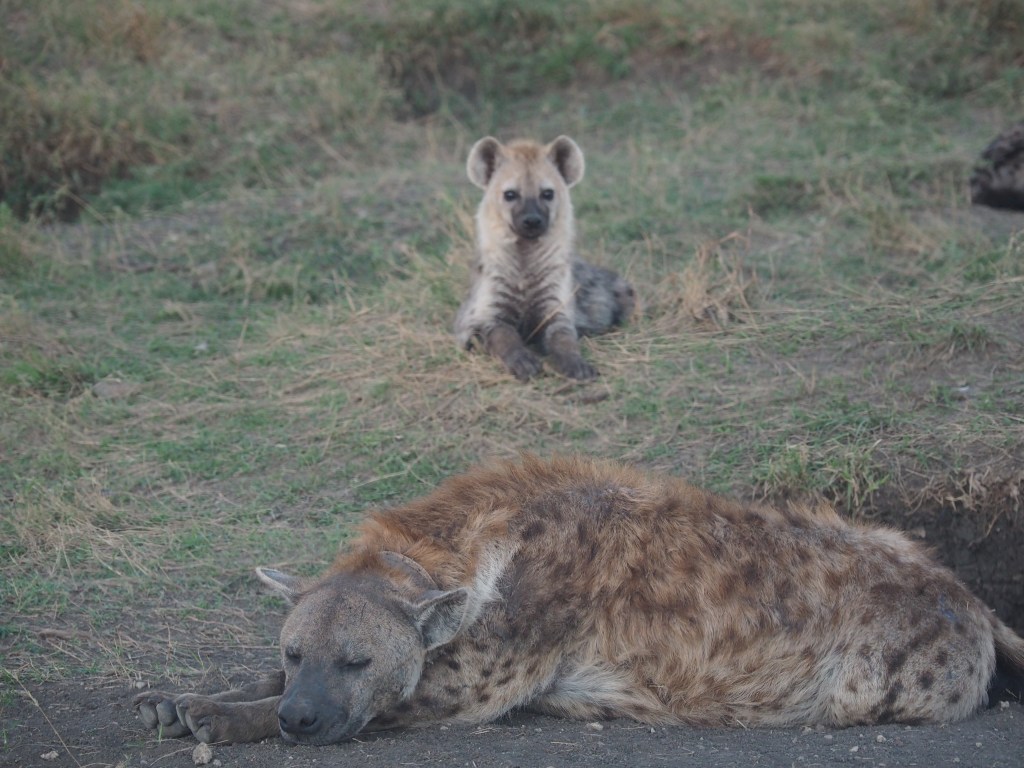
Spotted hyena have a social system defined by female dominance and a rank inheritance pattern that is also found in many monkey species, including baboons. Every night between behavioral data recording, we got to chat about the differences and similarities between our study animals while, of course, debating who has the better job. We may not have gotten a clear winner, but I will say, I’ve never seen a baboon crawl out of a buffalo rib cage.

 Anna in Amboseli
I’m so jealous you got to see the black rhino and baby! I know they are scarce. I’ve found a new respect for Hyenas too. Thanks for sharing your great adventure. Stay safe. 💖you.
LikeLike