For the first five months of my post-Duke life, I am in Amboseli National Park, Kenya, working as a field research assistant for the Amboseli Baboon Research Project. What does that mean?
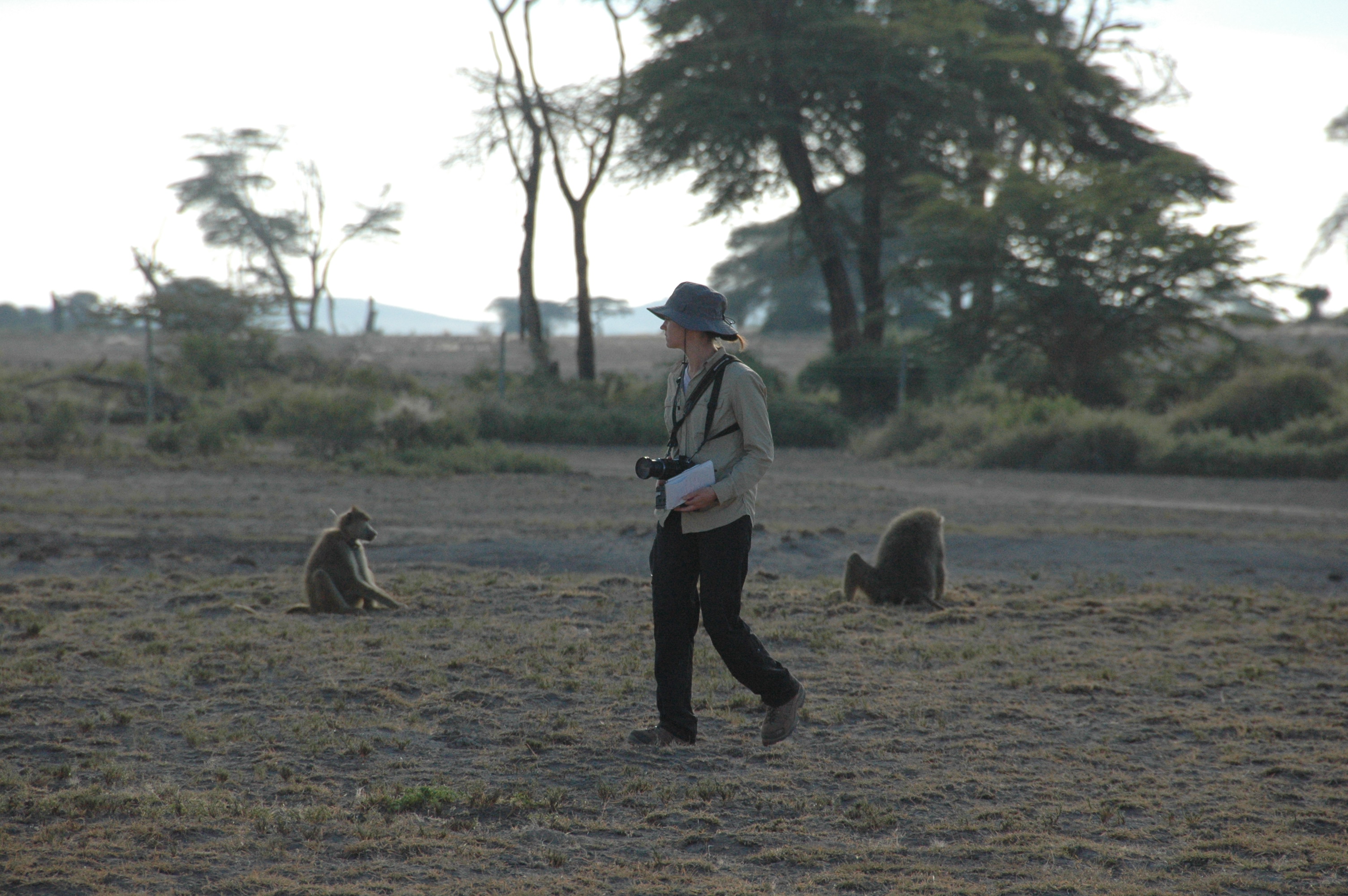
Basically, field research assistants are scientific mercenaries, people hired to do the on-the-ground work that their higher-ups can’t do. In my case, I help to collect data for Emily Levy, a graduate student at Duke in the Albert’s Lab. Like most of the lab, she is looking at the long-term effects of early life adversity (things like being born in a drought, losing a mom, having a sibling close in age, and other factors that shorten the lifespan of a baboon). Part of her project involves looking at the body size of individuals, especially adult females. If these things happen to you, are you smaller than the other baboons your age? Are you smaller than your mom or sisters? That could be a factor for shorter lives.
Measuring wild animals is tricky, you can’t really ask them to stand against a tape measure. In recent years, biologist have figured out how to measure physical features using photographs and parallel lasers, a combo called parallel-laser photogrammetry. You take a picture of an animal with little laser dots that are a set distance apart and that becomes your tape measure. If there are 62 pixels between 4 centimeters, how many centimeters are 721 pixels, or the length of the baboon?
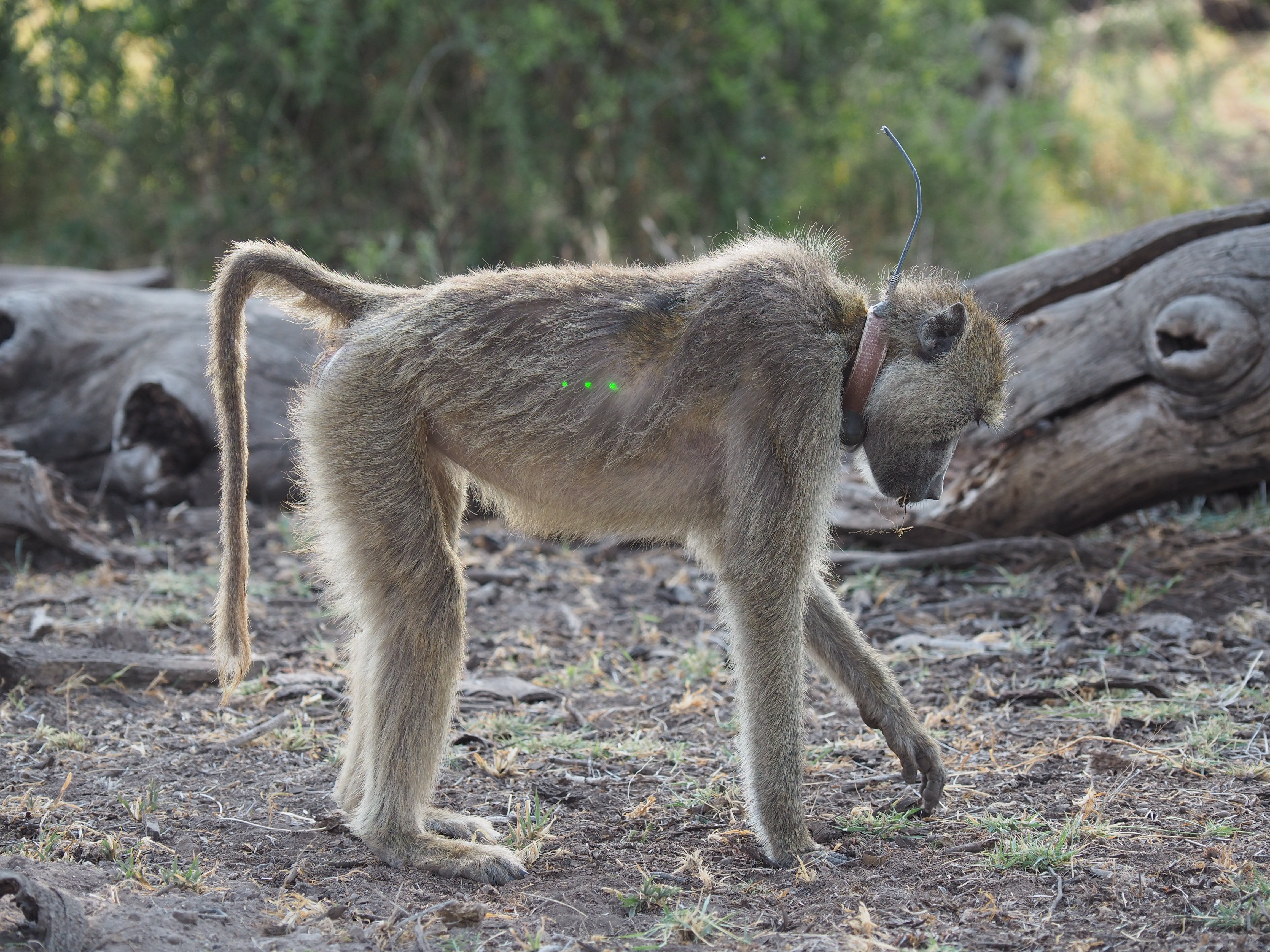
Every day, I take those pictures that Emily then measures back at Duke. Last year, it was the opposite, she took pictures over the summer here in Amboseli and we spent my senior year measuring them. That was the first time body size data was recorded for so many individuals in this population. Since they’ve been studied for almost 50 years, new ways of looking at the animals is really exciting. It’s been fun to help collect it and I can’t wait to see what we learn from these photographs!
 Anna in Amboseli