Every day, the full time research team drives out to observe 2 or 3 of the 6 study groups in the population. While there are at least 10 groups of baboons in and around the Amboseli basin, these 6 groups have been studied since they formed. That means the animals are habituated to the presence of the observers, letting us spend time with them without spooking them away from their food or changing their routines. We go out in 2 shifts every day. The early car leaves at 5:30 am and leaves to come back to camp at 11:30. The other car leaves at 12:30 and comes back at 6:30. Mornings are cooler and preferred by most so that’s the schedule I’ll dive into today!
- 4:45 am: Wake up! My first alarm goes off and immediately gets snoozed. Some days I fall back asleep, other days I stay up and listen to the hyenas, lions, or elephants I can hear just outside of the electric fence that keeps them away from us.
- 5:00 am: I get ready for the day in my field clothes, plus a jacket or sweatshirt. While it will get up to around 85 degrees F later, nights are only about 40.
- 5:30 am: The morning car leaves with me, a senior observer and a driver.
- 6:15 am: We are close to the baboons and depending how cooperative they are, we either find them or drive around listening to radio frequencies from the collars select individuals wear in each group.
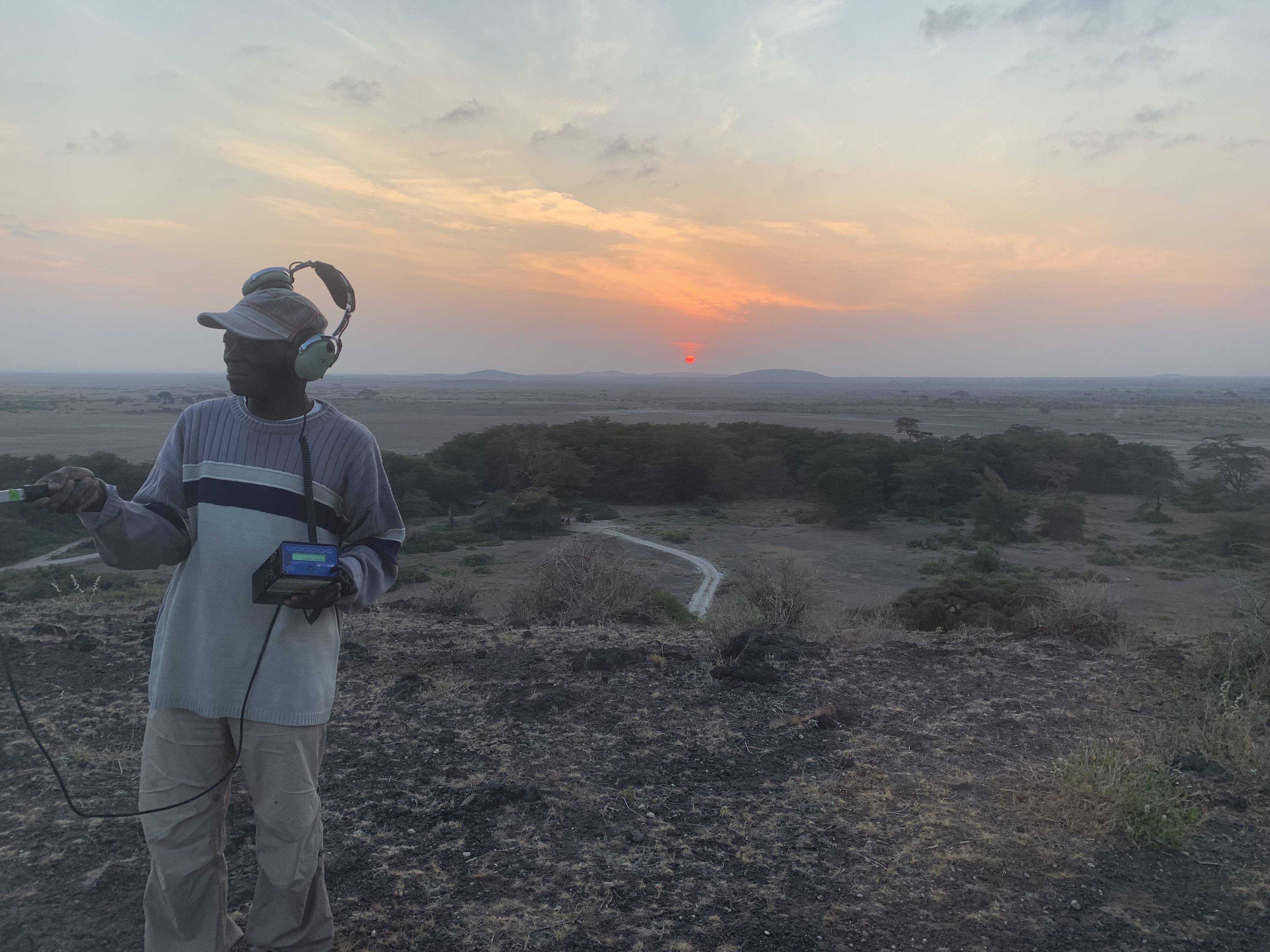
- 6:30 am: Find some baboons! Every night, they sleep in groves of trees. They wake up and head down just after sunrise which usually gives us a few minutes to eat breakfast and drink tea before we need to start following them. If they stay in the trees too long, I wander around and take pictures of other animals, cool birds, interesting tracks or any bones I find, basically building my Facebook album.
- 7:00 am: Baboon observation time! The senior observer does a census of all individuals in the group. Is everyone accounted for? Are there any new faces? Males leave their group every few years so sometimes males that were in one group wind up in another.
- The observer also looks for any injuries and makes notes about the females’ reproductive cycles. Later in the day, they switch and follow specific individuals, recording information like what they are doing, the plants they are eating, and who they are interacting with.
- Meanwhile, I look for specific females and spend 20-30 minutes stalking them. I have a list from Emily of high-priority females and, for the most part, have learned how to identify them. I try to get within about 30 feet of the baboons and wait for them to stand in the specific posture I need for good measurements. Sometimes that’s easier said than done!
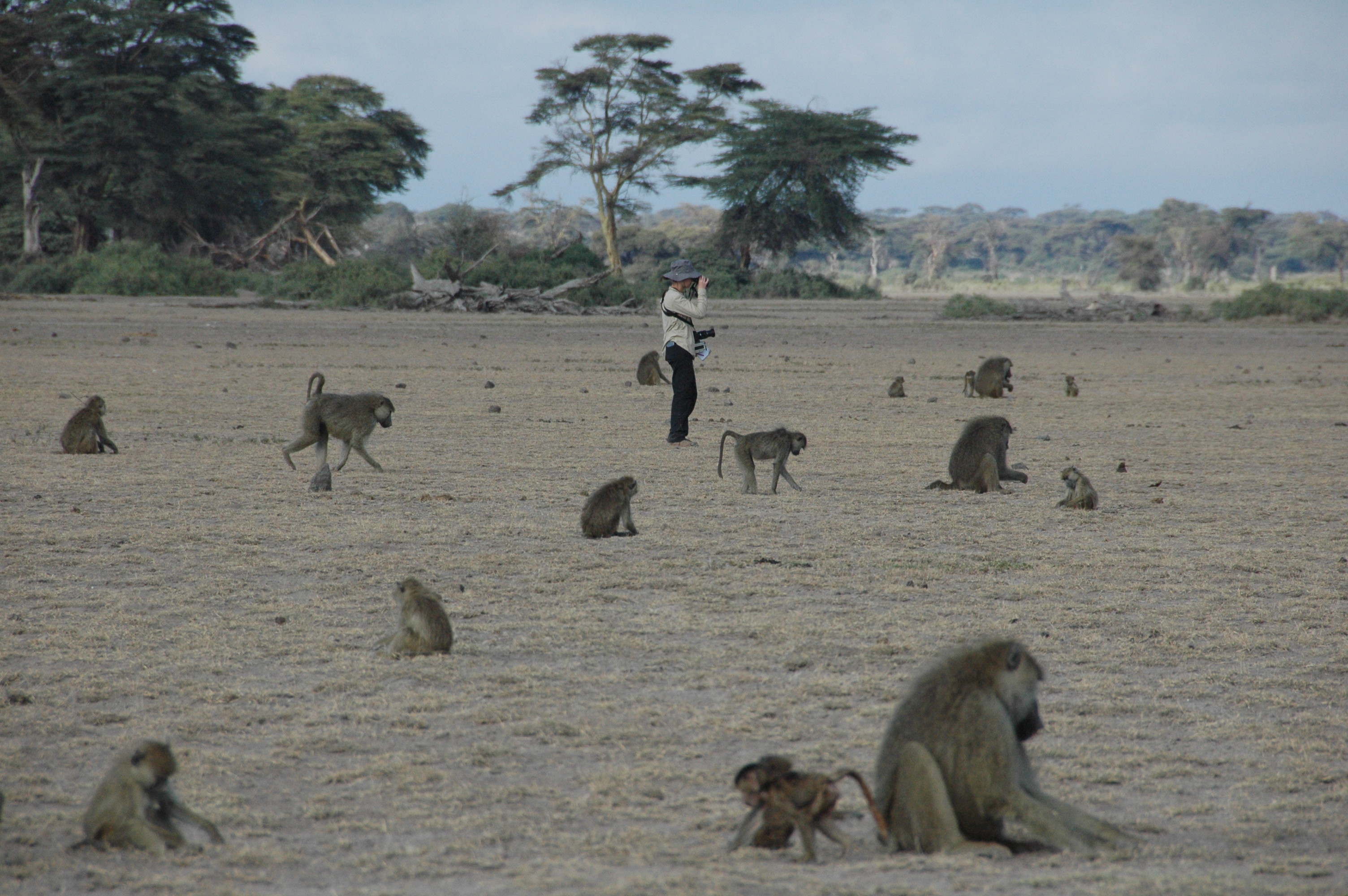
- While we are on foot, the driver moves the vehicle, so it stays in sight. He is also looking out for elephants or buffalo and if either get too close, we head back to the car.
- 11:30 am: We leave the group and go back to camp.
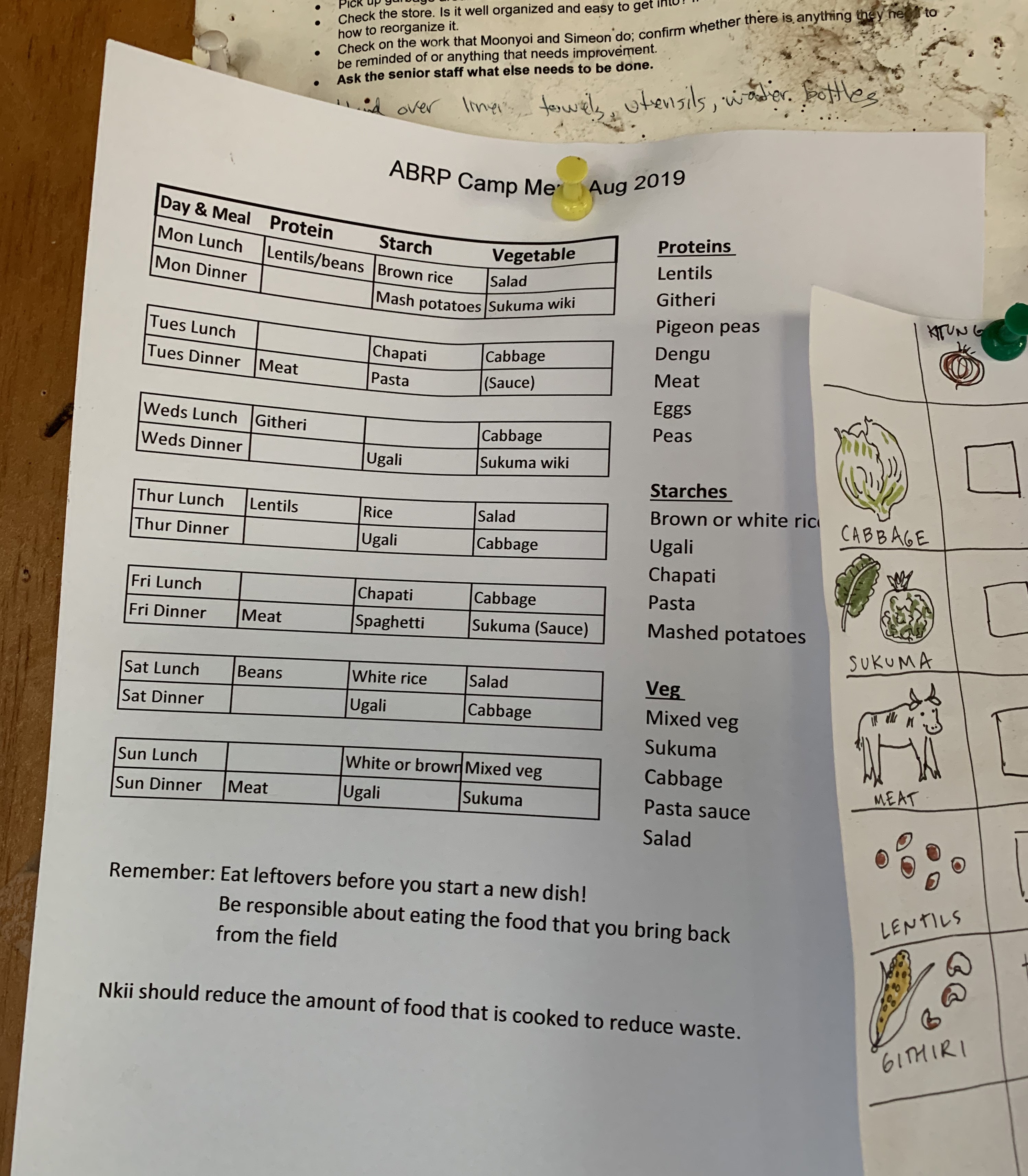
- 12:00 pm: Lunch time! Meals follow a weekly schedule so we always know what’s coming up next.
- 1:00 pm: Shower. While camp doesn’t have running water, it does have a solar heater, making hot showers possible.
- 2:00 pm: I back up all of the pictures I’ve gotten that morning and sort them into folders for each individual. On the weekend, I’ll sort through the folders and decide what pictures meet our measurement criteria. Of all the pictures I take, about 5% actually get sent to Emily for measuring.
- 3:00 pm: Nap/reading/hanging time.
- 5:30 pm: Pre-sunset crafting! The heat of the day breaks about an hour before the sun sets so I go outside my tent and knit or embroider and watch the animals walk by before it gets dark.
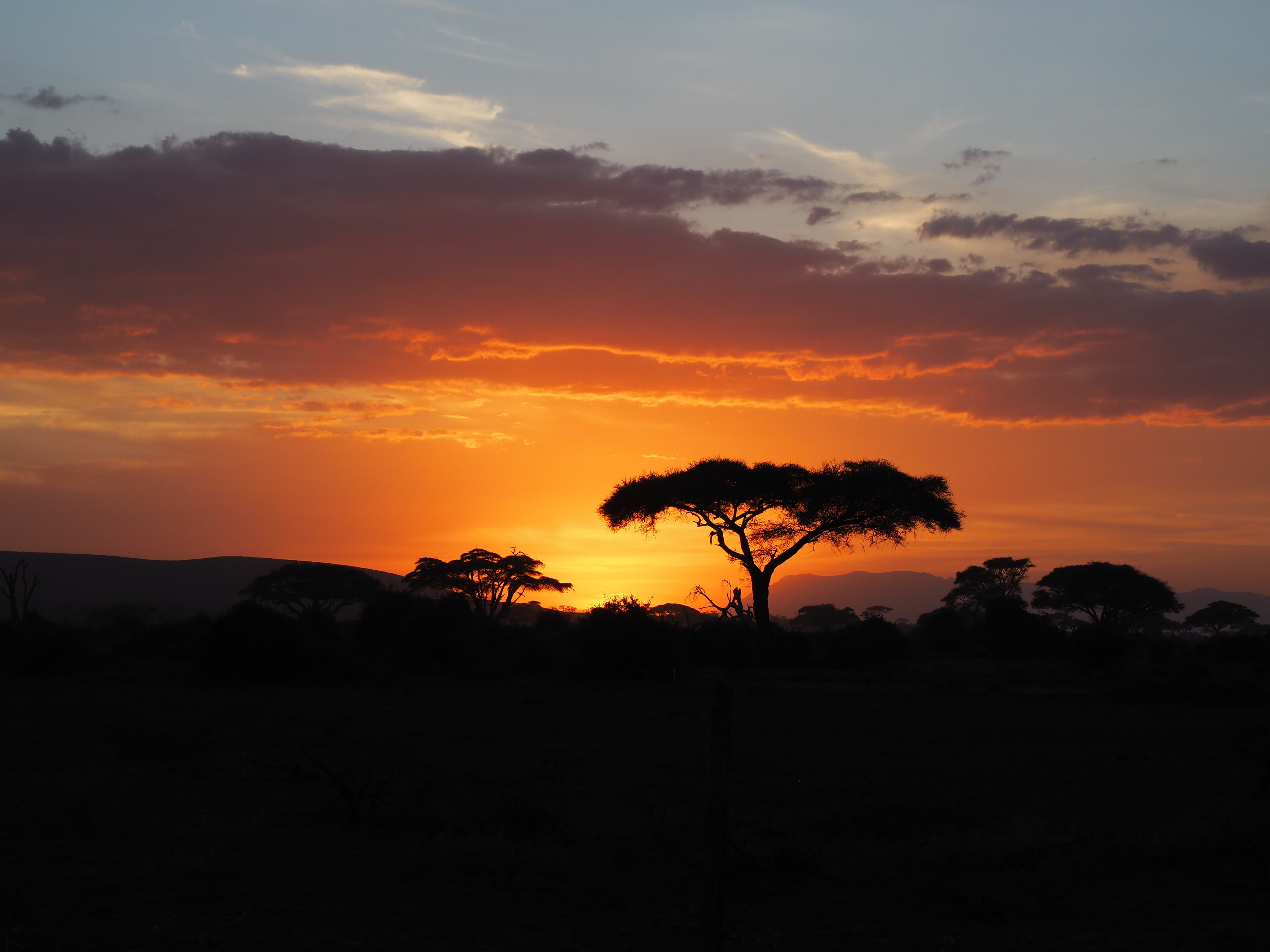
- 6:30 pm: Sunset. Every night, I watch the sun set behind the hills. Honestly, sunsets in America are a little prettier (since there are more clouds [from air pollution]) but here you can see so much of the sky it is pretty impressive. The timing is predictable since I’m only 150 or so miles south of the equator.
- 6:40 pm: Internet hour. Chelsea, the other American research assistant, and I meet up in the office to check email, social media, and message our families or whoever else is awake and available at 9 am their time.
- 7:30 pm: Dinner time!
- 8:30 pm: Bed time since the next day’s wakeup is far too early.
 Anna in Amboseli